Ptolemaic Facade (1-45)
Esna 1
- Location: Ptolemaic Facade, upper bandeau
- Date: Ptolemy VI Philometor
- Hieroglyphic Text
- Bibliography: None
Cartouches of Ptolemy VI, alternating with Khnum of Esna and Khnum Lord of the Field
Esna 2
- Location: Ptolemaic facade, upper bandeau
- Date: Joint reign of Ptolemy VI, Ptolemy VIII, and Cleopatra III
Extended titularies of Ptolemy VI, Ptolemy VIII, and Cleopatra III, all three beloved of Khnum-Re Lord of Esna and their deified Lagide forebears.
Esna 3
- Location: Ptolemaic facade, upper bandeau
- Date: Joint reign of Ptolemy VI, Ptolemy VIII, and Cleopatra III
- Bibliography: Recklinghausen, Derchain 2004, pp. 102-104; TLA
- Parallels: Multiple phrases in [Esna 17] and [Esna 31]
A
A[…]
bȝ šfy.t ḥȝt
spd ʿb.wy
dm ḥn.ty
ỉt m šȝʿ
šȝʿ.n=f mr mw
sʿnḫ ṯȝ.w
wtṯ nṯr.w nṯr.wt
sḫp(r) ḥnmm.t
ʿw.t nb.t mỉ-qd
ẖnmw-Rʿ nb tȝ-sn.t
ḥry nḥp n psḏ.t
Šw pw
Tfn.t r-ḥnʿ=f m Mnḥy.t
Nb.t-ww ḫr.tw r=s
dỉ=f ỉfd.w nw gb.t
ḥry.w sȝ n Gbb
n nsw.t-bỉ.ty ()|
zȝ-Rʿ (Pt.)|
ḥry-tp srḫ n Ỉs.t
A […]
The ram, august of face,
sharp of horns,
piercing of spikes.
The father in the beginning,
having begun the binding of seed.
He who enlivens chicks,
who begat gods and goddesses,
who creates the sunfolk,
and all animals in (their) entirety.
Khnum-Re Lord of Esna,
Chief of the potter’s wheel of the Ennead;
that means Shu,
Tefnut is with him as Menhyt,
one also calls her Nebtu.
May he give the four corners of the firmament,
what is above the back of Geb,
to the King of Upper and Lower Egypt,
the Son of Re, (Ptolemy VI)|
atop the serekh of Isis.
B
B […]
bȝ ʿȝ ỉrw
qȝ šw.ty
nb pw ḏfn mnḫ
pȝ.n=f bnbn
ỉr ʿnḫ n ḥry.w ẖry.w
Ḥḥ twȝ Nw.t
ỉwn sḫpr [ḫpr.w…]
[ʿẖ]m šps
dỉ tp=f m Nwn
ȝm wr dr ḫry.w=f
ỉmn=f ḏ.t=f
ḫnt ww=f n ʿnḫ
n-mrw.t ḥrỉ sȝt
r bw ẖr=f
ḫr ḥm=f bȝ.tw ḫnt sḫ.t=f
tȝ r-ḏr=f ḥr.tw r ḫry(.t)
ẖnmw-Rʿ nb sḫ.t
Šw zȝ Rʿ
nṯr ʿȝ nb ʿbȝ
dỉ=f ʿḥʿw=f ḥr wṯz Nw.t
rnp.wt=f ḥr bs m ṯȝw
n nsw.t-bỉty ()|
zȝ-Rʿ (Pt.)|
twt(.w) ḥr s.t-Ḥr
ḫnty ʿnḫ.w
B […]
The Ba, great of visible form,
tall of double plumes,
he is the Lord, the beneficent ancestor,
who first began creation,
and who makes life for those above and below.
Heh who lifts up Nut,
pillar of air who creates [manifestations…].1
August [croc]odile,
whose head appears in Nun;
great lion who repels his enemies.2
He hides his body
within his Field of Life,
in order to keep impurity distant
from wherever he is;
So when his majesty is present within his field,
the whole earth is removed from disaster.
Khnum-Re Lord of the Field,
Shu, son of Re,
great god, Lord of Aba:
may he give his lifetime of supporting Nut,
and his years of emerging as wind,
to the King of Upper and Lower Egypt ()|,
Son of Re (Ptolemy VI)|,
perfect upon the throne of Horus,
foremost of the living.
Esna 4
- Date: Ptolemy VI
- Bibliography: Recklinghausen, Derchain 2004, pp. 17-20; TLA
- Parallels: Esna III, 371 (several phrases)
Title
1dwȝ nṯr zp-fdw
ḏd-mdw
ỉỉ.n=ỉ ḫr=k
ẖnmw ḫnty pr-ʿnḫ
ʿpr(.kw) m [r’.w(?)]=ỉ
wn=ỉ hn
2pgȝ=ỉ [mḏȝ.wt(?)] r-ȝw=sn
ḥȝm=ỉ ḏsrw=k
[wr/ʿšȝ].w r nšw
dỉ=ỉ ḫrw=ỉ
ḥr [šd.t] ḥb.w n […]
3[swȝš]=ỉ ḥm=k m sns.w
1 Praising god, four times.
Words spoken:
That I have come before you,
Khnum-Re foremost of the Per-ankh,
is being equipped with my [utterances].
As I open the chest (of documents),
2 so do I unroll all [the papyri(?)],
thus do I capture your sacred forms,
being [greater/more numerous] than sand.
I set my voice
to [reciting] the festival texts for […]
3 and I [worship] your majesty with praises.
The King
Photo 1, Photo 2, Photo 3, Photo 4
4nsw.t-bỉty ( )|
5zȝ-rʿ (Pt.)|
6wʿb-ỉḥy nn snw=f
7nsw.t-bỉty
wtṯ.n Ỉp(?)
ms.n Sšȝ.t ḫnty ḥw.t-ỉry.w
ḥmww n šsr.w
rḫ-[ỉḫ]t
[sf]g-ỉrw m nfy [dr]f.w
wȝš ḥknw n ỉt=f
m dwȝ[w…]
(Pt.)| […]
4 The King of Upper and Lower Egypt ()|
5 The son of Re (Ptolemy)|
6 The peerless wʿb-ỉḥy-priest.
7 The King of Upper and Lower Egypt,
begotten of the Reckoner(?)3 (=Thoth),
born of Seshat foremost of the ritual library;
an artisan of speeches,
who knows [thing]s,
a sfg-ỉrw-priest with these [tea]chings,4
who utters praises to his father,
as hymn[s…]
(Ptolemy)| […]
Khnum-Re Lord of Esna
Photo 1, Photo 2, Photo 3, Photo 4, Photo 5, Photo 6
8ḏd-mdw n ẖnmw-Rʿ nb tȝ-sn.t
nṯr ʿȝ ḥry s.t=f wr.t
9Šw zȝ Rʿ
mswt n Ỉtm
šzp-ʿnḫ n ỉmn-rn⸗f
10štȝ ḫprw
nỉ rḫ(.w) bs.w=f
ỉmn 11 tỉ.t sdg smn.w
12dỉ=ỉ n=k r’.w rwḏ(.w)
(ḥr) sḫȝ nfrw=k
13nsw.t-bỉty
bȝ m ỉtr.ty
ḥw.wt štȝ.wt mn.tw
ẖr sḫm.w=f
ḥf(ȝ) sw nṯr.w
ỉḫḫ sw nṯr.wt
m nb nḥp.n=s(n)
nḥ(.t) ʿnḫ ḫr=f
ỉn ḥr-nb
m-ỉzw n qmȝ=f ḏ.t=sn
ẖnmw nb šfy.t
8 Word spoken by Khnum-Re Lord of Esna
Great god upon his great throne,
9 Shu, son of Re,
image of Atum,
living replice of Hidden of Name,
10 Remote of manifestation,
whose image is unknowable,
hidden of 11 image, concealed of statues.
12 I give you all mouths being strong
(while) commemorating your goodness.
13 The King of Upper and Lower Egypt,
the Ba in the Double Shrines,
secret temples endure
bearing his images;
as the gods praise him,
so do goddesses worship him,
as the lord who fashioned them;5
life is requested from him
by all people,
in return for his creating their bodies:
Khnum Lord of Prestige.
For the restoration, compare [Esna 12], 11; Esna 50, 6. The traces of a nb-basket Sauneron copied is not clear in the photographs.↩︎
Khnum is the same time of ȝm-lion in his litany: Esna 225, verse 85. In that section, he is first called Khnum-Shu in North Esna, then various forms of crocodiles and lions. See also Esna 127, 5 (crocodile in damaged context), and 5-6 (lion, possibly even ȝm, although the transliteration is uncertain).↩︎
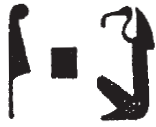 - Recklinghausen, Derchain 2004, pp. 18-19, n. 42, suggested the reading Ỉp, which is possible. But one might also consider other epithets of Thoth such as gsty, “he of the scribal palette” (LGG VII, 330a-b) and mȝʿty, “the righteous one” (LGG III, 229b-c).↩︎
 - This passage can be restored thanks to a close parallel in Esna III, 371, 7:
  . The phrase sfg-ỉrw was originally a divine epithet, but in the Ptolemaic Period it refers to a type of learned priest, also called “one who knows things” as here: see Jansen-Winkeln 2007, pp. 61-62, 67, n. 37; also the statue JE 36668, back pillar, col. 2: Metawi 2019.↩︎
 - For the restoration, see Esna III, 371, 1:
 .↩︎
.↩︎