Esna 56
- Location: Next to the South Pillar
- Date: Probably Domitian
-
Hieroglyphic Text
- Bibliography: None
ʿnḫ [nṯr nfr]
ṯnỉ […]
ỉm=s
ẖkr.tw m ḫkr.w n ẖnmw
tȝ-ṯnn nfr-ḥr
nb šw.ty-wr
Live the good god,
distinguished […]
in it,
equipped [with] the regalia of Khnum ( ):
):
Tatenen, beautiful of face,
lord of the great double-plumes;60
ḫʿỉ m ʿḥ m nḏm-ỉb
r mȝȝ ỉt-ỉt.w
ḥnʿ psḏ.t=f
He who appears from the palace in joy,
to see the father of fathers 61,
along with his Ennead.
swʿb s(w) nb.wy
msỉ s(w) nb.ty
spr=f ḥw.t-ỉt
m ʿb wr
(r) snỉ-tȝ
n nṯr ʿȝ m kȝr=f
The two lords 62 purify him,
the two ladies guide him, 63
he reaches the Temple of the Father(?)64
in great purity 65,
(to) kiss the ground
for the great god 66 in his shrine.
pr-wr m wnf
pr-nw m tfn
sḥ.w ỉpn m ršw […]
ḏr ʿq s(n) nb=sn
The Per-wer is delighted,
the Per-nu is ecastat[ic],
these chapels are in joy […]
since their lord enters them.
[…ỉt=]f nḥp
dỉ=f n=f nswy.t
m ḥqȝ m tȝ
ḫnty ʿnḫ.w ḏ.t
[…] his [father], the Potter,
he gives to him kingship,
as ruler of the earth,
foremost of the living, eternally.
This is all an allusion to the parallel scenes Esna 52 and Esna 74, in which the king “leaves the palace”, wearing the double-plumed crown characteristic of Khnum-Tatenen.↩︎
 - This might alternatively write “(his) father, Nun.” In Esna 70, 8, the king arrives to see the “father of fathers.”↩︎
For this epithet, Sauneron cites Esna 74, 12. This refers to Horus and Thoth, who purify the king before he meets Khnum and Menhyt in Esna 67.↩︎
Wadjyt and Nekhbet, as depicted accompanying the king in Esna 70.↩︎
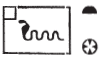 - The precise reading is uncertain. Since this text refers to the king meeting Khnum, it most likely should be “Temple of the Father,” especially given the city determinative. A similar spelling can be found in Esna 243, 9. However, elsewhere the serpent in the chapel seems to write ḥw.t-nṯr in Esna 157 B, which is paralleled by a regular spelling in Esna III, 242, 23 (58).↩︎
 - Kurth 2007, p. 312, n. 138, cites this example as a unique spelling of the lotus bud for r.↩︎
 - Note the spelling, appropriate for the statue of Khnum within his shrine, and reveals the contemporary pronunciation (cf. Coptic ⲛⲟⲩⲧⲉ).↩︎