Column B (159-165)
Esna 159
- Location: Column B, upper bandeau
- Date: Domitian
-
Hieroglyphic Text
- Bibliography: None
Esna 159 A
Ašw ṯmȝ-ʿ
ḥwỉ ẖȝk.w=ỉb
šzp mʿȝby.t
r sḫr ḫfty=f
sšm ỉr Hzw.t=f
ḥr wȝ.t-nḥḥ
ẖnmw ḫnty pr-nṯr
A Shu, valiant of arm,
who smites the disaffected,
who seizes the harpoon
to fell his enemy,
who guides whomever does what he praises443
upon the path of eternity:
Khnum, foremost of Per-netjer
Esna 159 B
Btȝ-ṯnn mrw.ty
pȝwty.w-tp[y.w]
r-ḫt ḥm=f
ẖnmw-Rʿ nb tȝ-sn.t
nṯr-ʿȝ ḫnt Iwny.t
B Tatenen, the beloved,
the first primeval ones 444
follow his majesty:
Khnum-Re, lord of Esna,
great god, foremost of Iunyt.
Esna 160
- Location: Facade, Column B
- Date: Domitian
- Hieroglyphic Text
- Bibliography: None
Cartouches of Domitian, before Khnum-Re Lord of Esna, and Khnum-Re Lord of the Field.
Esna 161
- Location: Column B, middle bandeau
- Date: Domitian
-
Hieroglyphic Text
- Bibliography: None
Esna 162
- Location: Column B, middle
- Date: Domitian
-
Hieroglyphic Text
- Bibliography: Sauneron 1959, pp. 65-66 (partial); Leitz 2014, pp. 1036-1037.
1ḥr ṯmȝ-ʿ
wr-pḥty
ḥwỉ ḫȝs.wt
nḫt bȝq.t
nsw.t-bỉty
nb-tȝ.wy
(ȝwtwkrtwr kysrs)|
zȝ-Rʿ nb-ḫʿ.w
(tmtyns nty-ḫwỉ)|
[ʿnḫ mỉ Rʿ] ḏ.t
[…]
1 Horus, valiant of arm,
great of strength,
who strikes the foreign lands,
protector of Egypt,
King of Upper and Lower Egypt,
Lord of the Two Lands
(Autokrator Caesar)|
Son of Re, Lord of Appearances
(Domitian Augustus)|
[living like Re] eternally
[…]
[…] ḥw.t-ẖnmw
ỉt-ỉt.w mw.t-mw.wt
mw.t-nṯr
qmȝ ḫmny.w
ỉr Rʿ ỉwty snw=f
pȝwty.w tpy(.w)
r-ḫ.t ḥm=s
šȝʿ ỉḫt nb tp-ʿ
2qmȝ.n=f Iwny.t
m kȝ.t nt ỉz
m pr ỉr.n tpy.w-ʿ
sbȝ(.w)=sn ḫtỉ(.w)
m rk nsw.wt ḏrty.w
ỉnb=sn m hȝw p[ȝwty.w]
[…]
ẖr-ḥȝ.t
[…] the temple of Khnum.
Father of fathers, Mother of Mothers,
Mother of God,
who created the Ogdoad,
who made Re, without his double,
the First Primeval Ones
follow her Majesty,
she who created everything long ago.445
2 He created Iunyt
as a classical style work,
in the domain made by the ancestors.
Its portals (were) inscribed
in the time of the ancestor kings,
its walls in the era of the pr[imeval…]
[…]
long before.
sʿḥʿ.n=f ḥw.t-nṯr=s
wȝḥ(.w) ḥr snṯ=f
sḥ=s r bw wnn=f
wḫȝ.w m-rwty=s
r ḏsr 3wbȝ=s
sbty.w pẖr(.w) ḥȝ=sn
qn.w m kȝ.t
ʿpr(.w) m smn(.w)
sʿrq(.w) m ỉrw=s nb.w
nbỉ.n=f gȝw.t ḥḏ
ỉmỉ[..] nbw
m wṯz-[nfrw?…]
[…]
[ỉḫt] nb
nw ỉr.t ỉḫt-nṯr
He erected her temple,
enduring upon its foundation,
her chapel in the location it had been;446
a hypostyle hall in front of it,
in order to sancitfy its fourecourt,
and enclosure walls encircling it all.
It is complete in its work,
equipped with statues,
and finished in all its requirements.
He fashioned a vessel of silver
within […] gold,
as a processional [bark?…]
[…]
all [necessary things]
for performing sacred rituals.
sḥḏ.n=f ḥw.t-[nṯr]=s
mỉ p.t
ḏsr.n=f ʿḥ=s
mỉ ȝḫ.t
sỉp.n=f 4ỉȝ.t=s
nḏ.n=f r-pr.w=s
ỉnb.n=f ḥw.wt=s
m mȝw
sḥn.n=f ḥnb.t=s
swsḫ.n=f tȝšw=s
swr.n=f ḥȝw ḥr
mn.t […]
[…]
[…] ʿȝ.t nb.w n mȝʿ.t
sḫnt[.n=f] nỉw.t=s
swr.n=f ỉȝ.t=s
ḏbȝ.n=f sḫm=s
ḫnt ʿḥ=s
He illumined her temple
like sky,
he sanctified her palace,
like the Akhet,
he inspected her 4 (sacred) mound,
he protected her temples,
he build walls around her shrines
anew,
he organized her temple estate,
he broadened her boundaries,
he magnified beyond what was
(previously) for daily offerings […]
[…]
[…] all precious stones,
[he] advanc[ed] her city,
he made great447 her (sacred) mound,
he replaced her sacred image
within her palace.
5sʿḥʿ.n=f ỉwn
n ỉwn-wr
wpy.n=f wḫȝ
n wr-ww
ḫws.n=f šnʿ
n šw
sȝḫ.n=f sšn
n zmȝ-mȝʿ.t
sḫy.n=f wȝḏ
n swȝḏ-bȝ
bs.n=f bȝw.t
n bȝ-wr
sʿȝ[.n=f ʿr(?)]
n (ỉw)ʿʿ n Rʿ
sȝḫ.n=f ȝḫ
n ẖnmw
wḏ.n=f wȝḏ
n wȝḏ-ḥr
ỉtḥ.n=f ỉdḥ
n 6ỉdḥw
ḏsr.n=f šzp
n ḥḥ-n-ḥḥ.w
mȝwy.n=f 7mnḥ448
n mȝỉ-ḥzȝ
snṯ.n=f 8nḥm
n nḥb-kȝ.w
5 He erected a pillar
for the Great Air-Pillar.449
He opened a papyrus column
for Great of the Field(?).450
He constructed a šnʿ-column
for Shu.451
He made excellent an lotus column
for the Companion of Maat.452
He lifted up a papyrus column
for swȝḏ-bȝ.453
He made rise up a bush
for the Great Ba.
He made great [a plant column]454
for the heir of Re (= Shu).
He made excellent455 an ȝḫ-column
for Khnum.456
He commanded a green column (wȝḏ),
for Green of Face.
He hauled up a papyrus column (ỉdḥ),
for He of the Delta.
He sanctified a bright column
for Heh of the Heh-gods.
He renewed a 7 papyrus reed
for the Wild-faced Lion.
He founded a lotus column
for Nehebkau.
smn.n=f wbȝ
ẖr 9wḫȝ.w
šzp.tw mỉ p.t
sḥḏ.tw mỉ tȝ
nỉ mnmn
10nỉ nni
mỉ p.t ẖr Rʿ
mn.tw ḏd(.tw) rwḏ.tw
m tȝ pn ḏ.t
Thus he established the pronaos,
bearing the columns:
bright like heaven,
illumined like the earth.
Without shaking,
without collapsing,
remaining, enduring, solid,
in this earth, forever.
Esna 163
Hymn to Neith
- Location: Column B, middle
- Date: Domitian
-
Hieroglyphic Text
- Bibliography: Sauneron 1962, pp. 287-295.
11ỉȝw n=ṯ
r qȝ n p.t
snỉ-tȝ
r sḫḫ n tȝ
12hn n=t
r mȝȝ ḥp.ty
snỉ-tȝ n kȝ=t
r-ʿ wȝḏ-wr
13nb.t tp-rnp.t
ḥqȝ.t ḫȝbs.w
ỉr.t Itm m ʿnḫ-tȝ.wy
14nb.t ḫȝty.w
sȝwy šmȝy.w
[qdf]ty.w (ḥr) 15ḥwỉ m wḏ=s
ʿnḫ mwt [ẖr] s.t-rȝ=s
16ỉty.t n nṯr.w p.t
ḥqȝ.t n nṯr.w [tȝ]
nb.t-r-ḏr ỉs
n nṯr.w dwȝ.t
11 Praise be to you,
to the height of heaven;
kissing the earth,
to the breadth of the earth;
12 jubilation for you
to the sight of the outer limits;
kissing the earth for your Ka,
as far as the Great Green sea.
13 Lady of the New Year,
Ruler of the Decan stars,
she who made Atum457 in Ankh-tawy.
14 Lady of the knife-demons,458
who owns the wandering demons,
the [reap]ers459 15 strike at her command,
life and death [are under] her authority.
16 Sovereign of the gods of heaven,
Ruler of the gods of [earth],
the All-Lady meanwhile,
of the gods of the Duat.
ḥȝ.t nṯr.w
ḫpr ẖr-ḥȝ.t
šȝʿ ḫpr
nỉ ḫpr ḫpr.w
ḫpr ḫpr.w nb.w
m-ḫt ḫpr=s
ỉr(.t) nṯr.w nw pȝwty
qmȝ qȝy qȝ
sḫpr ỉtn
ḏ(d).tw n=f Rʿ
ḏr ỉni st.wt=f r-ʿ [tȝ]
ỉr nṯr.w m zbṯ=f
[m-ḫt mȝȝ]=f sy
ʿn=f s(w) r rmy
17ḫft snỉ=s r=f
ḫpr rmṯ
m rmy.t n ỉr.t=f
The beginning of the gods,
who came about in the beginning,
who began the beginning,
before any creature had come about:
all things came about
after she came into existence.
She who made the gods of the Primeval One,
who created the high mound (of Hermopolis),
who created the sundisk:
he is also called ‘Re’ (Rʿ),
as his rays reach the limits (r-ʿ) of the [earth].
He who made the gods from his laugh,
[after] he [saw] her (Neith).460
He started again to cry (rmy)
17 when she went away from him:
thus humans (rmṯ) came about
from the tears (rmy.t) of his eye.
dỉ(=s) sw ḥr tp=s
m ỉrw=s n ỉh.t
mḥỉ=s ẖr=f
m Mḥ.t-wr.t
[…]=s sbỉ
ḥr=f ḥr mw
ḥtm=s ʿȝpp m rk=f
snḏm=f ḥr wp.t=s
m-ẖnw mw
r spr=s r zȝw m wḫȝ
[…]
She placed him upon her head
in her form of a cow,
she floated (mḥỉ) with him
as Mehet-weret (Mḥ.t-wr.t).
She [attacks] whomever rebels
against him on the water,
she destroys Apophis in his time;
he sits upon her horns
within the water,
until she reaches Sais in the night
[…]461
18mw.t-nṯr Rʿ
qmȝ Itm
Mḥ.t-wr.t
sḫpr ḏȝỉs.w
ỉh.t qmȝ ḫmnỉ.w
ḥr spr tȝ-sn.t
m […]
s.t mr ỉb=s
n ʿ.t-rsy.t
ḫmnỉ.w m ỉȝw
n ḥr=s
ḏȝỉs.w wr.w
m zȝ n ḥʿw=s
sbk Mnḥwy
ḥr ỉr(.t) n=s ỉȝw
twtw ʿȝ šmʿ-nfr
ḥr sȝ=s
[…]
19 ḥr-šdnw ḥr-gs=s ỉmnty
18 Divine Mother of Re,
who created Atum;
Mehet-weret,
who created the Djaisu;
Cow who created the Ogdoad,462
reaches Esna
in […]
the place her heart prefers
in the Southern District.
The Ogdoad463 are in praise
before her;
the great Djaisu
protect her body.
Sobek and Menehwy464
make adoration for her;
Great Tutu and Shemanefer465
are behind her
[…]
19 Horus of Shedenu is on her western466 side.
nṯr.w m hy
nṯr.yt m ṯhh
pʿy.t rḫy.t m wȝḥ-tp
p.t m ḥb
tȝ m ḥʿʿ
tȝ-sn.t ʿpr(.w) m ȝḫ.w=s
zȝw=s pw m tȝ-šmʿ
dr.n=s ȝh ḫpr ỉm
sḫr=s sbỉ.w
m ȝḫ tp-rȝ=s
spd.t ḥnw.t ḫȝbs.w
sšȝ.t wr.t nb.t sš.w
hȝy.[ty?] 20ẖr snḏ=s
tȝ ẖr šfy.t=s
tȝ.w ḫȝs.wt
(ḥr) sdȝdȝ n ḥry.t=s
ḥry-ḫndw
m ws-n-p.t
ḏsr-sštȝ
m sbḫ.t štȝ.t
Gods are in jubilation,
goddesses are overjoyed,467
both pʿ.t and rekhyt bow their heads.
The sky is in festival,
the eart rejoices,
Esna is equipped with her excellent power,
it is her Sais in Upper Egypt.
She removed the suffering that happened there,
striking down the rebels
with the power of her utterances.
Sothis, Mistress of the Decan stars.
Seshat the Great, Lady of Writing.
The [two] firmaments 20 are in fear of her,
the earth bears respect for her,
all lands, domestic and foreign,
tremble out of terror for her.
She upon the Staircase,
in ‘The Window of Heaven.’468
Sacred of secret image
in the Mysterious Portal.
wn.tw
sšm=s r-gs zȝ=s Wsỉr
wn.tw zp-snw
ʿnḫ.tw zp-snw
Mnḥy.t ḥy m ḥʿpỉ
Nb.t-ww pw
sḫpr ỉḫt nb
ỉr.t sm.w
sḫpr wȝḥ.t
r sḫpr pr.t nb
n 21qmȝ.n=s
ỉr.n=s ẖr.wt
n nṯr.w rmṯ
So may she be!
Her statue is beside her son, Osiris.469
So may she be!
So may she live!
Menhyt, who floods as Hapi;
that means Nebtu
who creates all things,
who makes plants,
and creates grain,
in order to produce all seeds
for 21 those she created:
thus she made the food portions
for gods and people.
sš.n=s šnw.t=s
m ḥb rkḥ-wr
8 (1/5+1/15) n snw n pr.t
r rdỉ(.t) ḥtp.w n nṯr.w
ʿnḫ [ḥr.w]-nb.w m zp=s
ptḥ[.n=s] ʿḥ=s
m ḥb kȝ-ḥr-kȝ
27 (1/2 + 1/3 + 1/15)
n 4-nw n ȝḫ.t
r šms ʿntyw m ḫȝ.w nb.w nḏm-sṯỉ
r wrḥ nṯr
m 22ỉbr ḥkn tỉ-šps mḏ tp.t
ḫȝ.w nb nḏm-sṯỉ nfr
nṯr.w m nh(.t) n ḥʿw=s
sns(n) nṯr.w nṯry.t
m ỉȝd.t=s
She opened her granary
in the festival of Great Burning,
on II Peret 8 (Meshir 8),
to give offerings to the gods,
every[body] lives from her leftovers.
[She] opened her palace
in the Khoiak Festival,
IV Akhet 27
(cf. Khoiak 27).
to offer myrrh of all sweet-scented ingredients,
to anoi[nt]470 the gods,
with ỉbr, ḥkn, tỉ-šps, mḏ, tp.t,471
all good and sweet-scented ingredients.
The gods protect her body,
and gods and goddesses breathe
through her scent.
ng(ȝ).n=s ḥw.wt=s
m ḥb ỉn.t
m 26 (1/2 + 1/3 + 1/30)
n snw n šmw
r sṯȝm nṯr.w
r ḏ[bȝ] ḏ[fn?]
m ỉry.w pȝq nṯry psḏ
mnḫ.t nb n ỉr(.t) ỉḫt-nṯr
She opened her chapels
in the Valley472 Festival,
on II Shomu 26
(i.e. Payni 26 ),
to clothe the gods,
to cov[er] the anc[estor?],
with ỉry.w, fine linen, nṯry,473 and 9-cloth,474
all linens for performing divine rituals.
23ỉb=s nḏm(.w)
m-ẖnw ḥw.t-ỉt
ḥw.t-mw.t bʿḥ(.tw)
m nfrw=s
pr-nṯr ḏsr.tw ẖr ḫm=s
nb.t tȝ-nṯr
ḥqȝ.t Pwn.t
ḥnw.t n tȝ nb
Mw.t m Išrw
Nḫb.t m nḫb.t(?)
mr.t-Ptḥ m ʿnḫ-tȝ.wy
Nbw.t m wḥʿ-tȝ
wr.t m zȝw
ḥw.t-ḥr m spȝ.wt nb
nb.t nšn
sḫm=s m Sḫm.t
bȝ ḥm=s
m Bȝst.t
24pʿpʿ ḥr m nsw.t-nṯr.w
ỉṯ.s n=f psš.ty
m mȝʿ-ḫrw
rn-wr m-hȝ.t nṯr.w
ḏsr.tw ȝy r psḏ.t
23 Her heart is pleased
within the Temple of the Father,
the Temple of the Mother is flooded
with her goodness,
Per-netjer is sanctified holding her chapel.
Lady of God’s Land,
Ruler of Punt,
Mistress of all lands,
Mut in the Isheru,
Nekhbet in Elkab/Nekhen(?),475
Beloved of Ptah in Ankh-tawy (Memphis),
the Golden in wḥʿ-tȝ (Heliopolis),476
the Great one [in] Sais,477
Hathor in [all] districts.
Lady of rage.
She is mighty (sḫm) as Sakhmet (Sḫm.t),
and her majesty is appeased (bȝ)478
as Bastet (Bȝst.t).
24 She who bore Horus as King of the Gods,
having seized for him the Two Shares
in justification.
Great Name in front of the gods,
most sacred, truly, of the Ennead.
ȝḫ.t
rḫ.t ẖr s.t-rȝ=s
ȝḫ-rȝ
mʿr-zp.w
ḥw.t wsḫ.t n=s wʿ(.w)
ḫʿỉ nb ẖr s.t-rȝ=s
ʿnḫ mwt m ḫfʿ=s
šȝỉ rr.t m wḏ kȝ=s
nỉ ỉr.tw sḫr.w
25m-ḫm=s
wr wr(.w)
nỉ wr r=s
nỉ mỉt.t=s m tȝ-šmʿ mḥw
nỉ wn ḫpr.w nb.w m p.t tȝ
wp(-ḥr) pr ḥr-sȝ=s
ỉr.n=s ȝ.t
qmȝ.n=s wnw.wt
ỉr.n=s rnp.wt
qmȝ.n=s ȝbd nb
sḫpr.n=s ȝḫ.t pr.t šmw
The excellent one,
knowledge is under her authority,
Excellent of utterance,
whose events are successful,
the broad court belongs to her alone.
The lord appears under her authority,
life and death are in her grasp,
Shai and Renenet in her Ka’s command,
no plans are carried out
25 with her unaware.
Greatest of the great,
nobody is greater than her,
she has no equal in Upper or Lower Egypt,
there is nothing in heaven and earth,
except that which came forth after her.
As she made the moment,
so she created hours,
she made years,
she created every month,
and she produced Akhet, Peret, and Shomu.
ỉr.n=s šʿ
qmȝ.n=s zȝṯ
ḫpr zȝw
m zȝw-n-tȝ
ỉr mnmn(?) tȝ
nỉ pẖrẖr Zȝw
spȝ.t pw ḫpr
m ḥȝ.t
(tȝ)-sn.t mỉt.t m tȝ-šmʿ
26ḫnt-tȝ ḫr.tw r=f
As she made sand,
so she created the earth (zȝṯ),
Sais (Zȝw) came about
in the ‘Beam of the Earth (zȝ n tȝ)’:479
if the earth shakes(?),
Sais (Zȝw) will not move around.480
It is the district which came about
in the beginning,
Esna likewise in Upper Egypt.
26 It is called ‘Khent-ta.’
dỉ=s ḥr-sȝ
r pr-nṯr
mḥ.t (n) tȝ-sn.t
ỉȝ.t nṯry pw
nỉ mỉt.t=s
r sfsf-ȝw
n Wsỉr nb ʿbȝ.t
ḥnʿ ḥtpty.w ỉmy.w-ḫt=f
sḏr n=s ʿḥʿ.w
ṯz-pẖr
nhp gȝwty.w
m dwȝ n=s
ỉšd šps ȝḫȝḫ.tw m ʿnḫ
nỉ wšr
Itm ḥnʿ ms.w=f m 27ršrš
pȝ-wrš-n-hrw-9
m hy n kȝ=t
pȝ-wrš-n-hrw-16(?)
m hȝ-snḏ n ḥm=t
ḏḥwty hr(.w) rš(.w)
n ptr=t
nṯr.w štȝ.w
(ḥr) ʿḏʿḏ n mȝȝ=t
ỉmỉ.w s.t-[ʿȝ.].t
Wsỉr-nḫt Inp Imy-P
ḥr.t zȝ.t-Rʿ ỉwt.t-ww Nb.t-ww
ḥr nhm n rn=t
Afterwards, she set out
towards Per-netjer,
north481 of Esna
(it is a sacred mound,
without its equal),482
to deposit funerary offerings
for Osiris, Lord of Aba,
and the blessed dead in his following.
Those standing up lie down for her,
and vice versa;483
the suffering ones rise up early
in adoration of her.
The august Ished-tree is verdant with life,
never drying up;
Atum and his children are ecstatic,
The Guardian of Day 9(?)484
makes hy singing for your Ka;
The Guardian of Day 6
performs hȝ-snḏ cheers for your Majesty;
Thoth is happy and rejoices,485
from beholding you.
The mysterious gods
cheer loudly from seeing you;
those within the [Great] Place
(Osiris-Nakht, Anubis, Imy-P,
Horit, Daughter of Re, Iutu(?), Nebtu)486
make music for your name.
pr-ẖnmw n sḫ.t
28m hy zȝ-tȝ
sbỉ ḥr.tw r ḥw.t-bȝ.w
hmhmty m zbỉ-n-sḏ.t
ʿȝpp bns(.w)
ỉz.t-Rʿ m ḥb
ỉmỉ.w tȝ-sn.t m ṯḥḥ
ḥw.t-ṯȝ.wy m ȝw(.t)-ỉb
wḏȝ ỉb=t
tmȝ.t ỉr ḏ.t(=f)
zbỉ nḥḥ
ḏ.t m-ḥr[=t]
dgȝ.n[=t] ḥḥ m rnp.wt
n ḥn.ty
Per-Khnum of the Field
28 makes hy and zȝ-tȝ cheers!
The rebel is far from Temple of the Bas,
‘Loud-mouth’ is now a burnt offering,
Apophis is hacked to pieces,
and the Crew of Re celebrates in victory:
Those within Esna exclaim in joy,
Temple of the chicks is delighted.
May your heart be sound!487
Mother who creates the morning sun,488
who passes through cyclical eternity,
linear eternity is in [your] face,489
since [you] have seen millions of years
into the future.
Esna 164
- Location: Column B, Lower Bandeau
- Date: Domitian
-
Hieroglyphic Text
- Bibliography: None.

Esna 164 B
Bnsw.t-bỉty
nfr […]
[…] m ms.w
wȝḏ zȝṯ
m pr=f
[…] tȝ.wy nb
m nfrw=f
B King of Upper and Lower Egypt,
good […]
[…] in products,
the earth becomes green
when he comes forth,493
all lands […]
through his perfection.
Esna 165
- Location: Column B, base
- Date: Domitian
- Hieroglyphic Text
- Bibliography: None
Minor inscriptions.

 . Reading uncertain. This might also be an epithet about loyalty to the god, such as ỉr.w (ḥr) wȝ.t=f, “those who are upon his path.” (Vittmann 1999, p. 168, s.v. jr ḥr wȝt).↩︎
These epithets all denote Neith.↩︎
Apparently the naos of Neith was in its original, Pharaonic location, but the surviving pronaos was an extension.↩︎
 - Note the use of Nefertem to write n=f (< nfr) for the verbal form, as happens later with the regular nfr sign in col. 5; cf. Sauneron 1959, p. 48, n. 1.↩︎
Here begins a long list of fanciful designations for the papyriform columns in the pronaos, most equated with different terms for papyrus or lotus plants; a similar section occurs in Esna 183, 4-5. As in similar texts from these columns, there is heaven alliteration between the construction verb, the name for the column, and the god – this alliteration will not be pointed out below, but it should usually be apparent in the corresponding transliteration. The gods are usually forms of Shu, the god who supports the sky just like the columns; occasionally they are forms of Khnum, Esna’s local version of Shu. Leitz 2014, p. 1036 noted that between this text and Esna 183, there appear to be 23 distinct columns called out here, only one less than the total 24 columns of the pronaos.↩︎
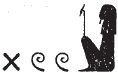 - Reading uncertain, but likely based on the alliteration.↩︎
This is also an epithet of Shu: LGG VI, 310b-c.↩︎
This is a popular epithet of Shu: LGG VI, 210b-c; also Esna 176, 1.↩︎
Restored based on alliteration, with the same term ʿr in Esna 183, 5.↩︎
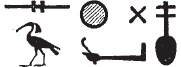 - Note the use of nfr to write n=f (< nfr) for the verbal form; cf. Sauneron 1959, p. 48, n. 1.↩︎
 - This spelling of Atum also occurs in Esna 54, 12; Esna 67, 12; Esna III, 218, 9; cf. Sauneron 1962, p. 293, n. b.↩︎
Most of these epithets occur verbatim in Esna II, 14, 9-11; cf. Recklinghausen, Derchain 2004, p. 34.↩︎
For the restoration and this group of gods, see Sauneron 1966, pp. 5-7; LGG VII, 231b; PWL, p. 1072.↩︎
Restored from a similar passage in the Neith cosmogony: Esna III, 206, 9, §13.↩︎
Sauneron 1962, p. 289, restores the date of Neith’s evening festival described on Epiphi 13.↩︎
Amunet at Thebes is often associated with Neith, particularly as an Ihet-cow associated with the Ogdoad and the birth of Re: Klotz 2012, pp. 71-74.↩︎
 - For this spelling of the Ogdoad with walking legs representing the nisbe ending, cf. Klotz 2006, p. 73, n. 33.↩︎
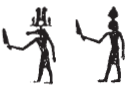 - Sauneron 1962, pp. 289, 293, n. i, thought this was a group writing Menehwy, with the first crocodile god merely holding the god’s knife. Instead, I suggest the first crocodile here is Sobek, juxtaposed with Neith’s other saurian son Shemanefer in the next verse. Both gods show up in Esna 185 A, where the crocodile with a crown writes s < ‘Sobek’.↩︎
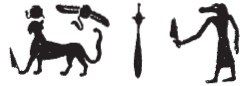 - Sauneron 1962, p. 289, read the group as ‘Tithoès le grand coutelier’, whereas Kaper 2003, p. 237, understood the second crocodile as a writing of pḥty, “strength.” Based on the of gods in the preceding verse, I prefer to identify both Tutu and Shemanefer, both children of Neith revered at Esna. For the two gods together, see Esna VI, 486; they are also mentioned together in Esna 107, 4.↩︎
 - As Sauneron 1962, p. 294, n. x, noted, this ram-headed falcon sign represents the western wind (cf. Riggs 2006, pp. 329-329), as also represented on the ceiling: Esna IV, 451, Right (Ouest). This is similar to the southern and eastern winds featured in Esna 105 and Esna 128, and the hieroglyph showing the northern wind later on in Esna 163, 26.↩︎
 - Evocative spelling of “gods and goddesses,” appropriate to Neith, the crocodile mother of Sobek and Shemanefer.↩︎
The epithet and toponym (“window of heaven”) identify Neith here as Bastet: Meeks 2006, pp. 249-251. Sauneron 1962, p. 290, did not catch the reference, but later wrote a short essay about this location: Sauneron 1969, pp. 51-53, without mentioning this example.↩︎
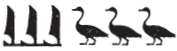 - Same spelling of Osiris in Esna 81, 3; Esna 110, 7; Esna IV, 433, 1. This is appropriate for what follows, since it conjures up the theme of the prosperous field.↩︎
The restoration is certain based on the calendar text: Khoiak 27 (Esna II, 55).↩︎
All these types of incense, salve, and ointments are displayed and linked to Neith in the Laboratory (119-125).↩︎
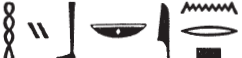 - Spelled as if this were “the Festival of Stone”, the chronological details makes it clear this is actually the Valley Festival, as recognized by Sauneron 1962, p. 290.↩︎
 - Reading uncertain, but this appears to be the same type of linen mentioned in a similar context in Esna 85, 2:
 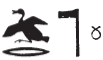 , and Esna II, 37, 1. Those versions seem to postpone the nṯr-sign because of honorific transposition. Here the finger sign writes ṯȝ, and perhaps the nṯr-sign is decomposed into its phonetic elements.↩︎
Sauneron 1962, pp. 290, 294, n. q, did not translate these names for cloths, but they are all attested elsewhere: ỉry.w (Wb I, 105, 19-20 ), psḏ, “9 or shining cloth” (Wb I, 558, 11).↩︎
 - Kurth 2007, p. 353, n. 225 noted this singular spelling of the toponym. Perhaps it is derived from the usual value of the corner sign, nh > Nḫ(b).↩︎
This epithet is another name for Hathor-Nebethetepet, the Heliopolitan goddess often linked to wḥʿ-tȝ: Meeks 2006, pp. 9-10, 62, n. 89, 66, n. 107.↩︎
Sauneron 1962, p. 294, n. s, linked this to the wrr.t-form Neith assumes upon reaching Sais (Esna III, 2016, 14, §20). Note also that the specific priestress of the Northern Sais nome was “(singer of) the Great one (wr.t)”: Edfou I, 331, 7; Klotz 2014c, p. 732.↩︎
Compare the calendar entry for Paophi 4, where the pacified form of Tefnut is referred to as a bȝ-form during the festival of Gm-bȝw=s.↩︎
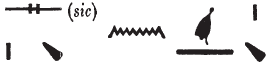 - Sauneron 1962, p. 292 declined to translate this and the next phrase; Kurth 2007, pp. 290-291, n. 91, offered a quite different interpretation. There seems to be a reference here to Sais as a beam (zȝw) supporting the earth, just like a cosmic zȝ-tȝ serpent. That is the metaphorical use of this phrase, which occurs several times to describe Khnum at Esna (Esna II, 17, 11 (partially damaged); Esna III, 378, 15; Esna VII, 580, 11). There is also a like-named toponym in the Western Delta, mentioned on the Satrap Stela (line 15:
 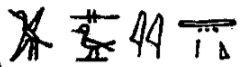 ) as being to the north and west of Buto (Wb III, 410, 18; other references to this meaning noted by Yoyotte 1989, pp. 77-78). Since Sais was quite close to Buto, both meanings could work here: the city of Neith literally came into existence in this area of the Delta, and it also exists, conceptually, upon a straight cosmic snake – in contrast to the the coiled serpent of the Nile (pẖr-ḥr) mentioned in the subsequent verse.↩︎
 - The reading of the two pairs of legs is speculative: it seems to be a reduplicated or geminating verb of motion, and the subject is “the earth (tȝ)”. This would fit the verb mnmn (Wb II, 81, 5); Kurth 2007, p. 290, n. 91, read nmt without a subject and tȝ as its direct object. As noted in the preceding verse, the idea seems to be that the position of Sais is stable, even in the case of floods or earthquakes. The coiled serpent can be a determinative or ideogram for pẖr-ḥr, one of the Heliopolitan snakes in charge of the Nile flood: LGG III, 110; Kurth 2007, pp. 290-291, n. 91. As such, this sign could read pẖr, “to encircle”; I prefer pẖrẖr < pẖr-ḥr (phonetic change), since the latter verb more precisely means “to wander off” (Wb I, 549, 7).↩︎
 - As Sauneron 1962, p. 294, n. x, noted, this four-winged ram sign represents the northern wind (cf. Riggs 2006, pp. 329-329), as also represented on the ceiling: Esna IV, 399, A, Bottom (Nord). This is similar to the southern and eastern winds featured in Esna 105 and Esna 128, and the hieroglyph showing the western wind earlier on in Esna 163, 19.↩︎
A shorter account of Neith’s journey to Per-netjer (aka Per-khnum of the Field) north of Esna, is related in Esna 81, 2-3.↩︎
The recumbent dead usually arise when the solar god enters the Netherworld or necropolis: cf. Klotz 2006, pp. 97-98, n. C; Klotz 2012, p. 351, n. j. An exact parallel in Urk VIII, 36b. A more detailed version of this epithet occurs in Esna 156, 19.↩︎
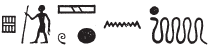 - Sauneron 1962, p. 292, read these two gods as the Guardians of days 4 and 6. However, the only such protectors attested otherwise are the Guardian of Day 9, also associated with Atum (Esna 129, 2; Esna III, 196, 4; Esna VI, 508, 9-11), and Day 8 (Esna 130, 2). It’s unclear how precisely to read this serpent, or how Sauneron interpreted this as the number 4. If the published hieroglyph is correct, it has 8 bends, which could favor the reading 8.↩︎
For Thoth’s presence at North Esna, cf. Esna 130, 2; Esna II, 77: Phamenoth 10-11; Klotz 2014b, pp. 37-38.↩︎
For the 7 divinities of the Great Place, another necropolis north of Esna, see Esna 130, 1-2; Esna VII, 613.↩︎
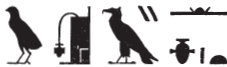 - While this appears to be wṯz-ỉb=t, “lift up your heart (sursum corda)”, the aleph-bird indicates this cannot be correct. Instead, this is another example of the wṯz-sign replacing the similarly-shaped wḏȝ hieroglyph: Sauneron 1963a, p. xxxv; Esna 156, 20; Esna 169, 8.↩︎
 - Sauneron assumed ḏ.t means eternity here, but the sun determinative would be unexpected. Instead, I assume this is a reference to Neith creating Re in the morning, just as in the phrase m-ḏ.t=f, “in the morning.”↩︎
See the corrected version of this passage in Sauneron 1963a, p. i (Corrections, p. 283, l. 2).↩︎
For similar spellings of wbn featuring a ram, cf. Klotz 2014b, p. 34, n. b.↩︎
Heka writes tȝ, “earth”, since he wears the special crown of Geb (Klotz 2014b, pp. 50-51, n. b; for Heka-Geb, see Klotz 2014b, p. 40). Sobek writes s via acrophony; cf. also Esna 185 A. Similar writings of Esna with Geb, Sobek, and Neith occur in Esna III, 318, 11; IV, 463, S; 464, N; 465, N; cf. also Esna III, 378, 23; IV, 461, S (just Geb and Neith). Kurth 2007, p. 533, n. 4, suggested some of these examples cannot derive from Sobek, since the crocodile looks more like Shemanefer, but the distinction is dubious since Shemanefer himself is often called “Sobek.” ↩︎
s(r), “ram” + ḥḏ, “white crown”. This spelling echoes wbn at the beginning of the text.↩︎
The same epithet occurs in the litany to Heka, Esna III, 242, 25 (75), the first indication this entire text is about him (see below).↩︎
 - The spelling of this participle is notable, Anubis playing a tambourine, iconography discussed by Ritner and Von Lieven. This apparently derives from s(h)r, to “strike a drum” (>>refs>>), and relates to the phrase sr-biAy.t, “to foretell wonders”, used in a musical sense (ref. to H.G. Fischer). In his litany, Heka is similarly “lord of wonders” and “he who foretells what will come to pass (sr ḫpr)” (Esna III, 242, 18 (19)-(20); cf. also Esna)
.↩︎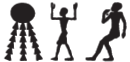 - ḥ < ḥȝy, “to shine” (Sauneron 1982, p. 160); kȝ < qȝ. The same spelling of Heka occurs in Esna III, 242, 20 (33), shortly before the same epithet as here, “one rejoices to see him”: Esna III, 242, 20 (34); the signs are inverted in Esna III, 242, 22 (48).↩︎
 - For the spelling, cf.
  - For this spelling, see also