Intercolumnar Wall E (111-115)
Esna 111
- Location: Intercolumnar E
- Date: Domitian
- Hieroglyphic Text
- Bibliography: None
Cartouches of Domitian.
Esna 112
- Location: Intercolumnar E
- Date: Domitian
-
Hieroglyphic Text
- Bibliography: Elgawady 2016, pp. 207-208.
- Photograph
Formula
1ỉȝw n=k
pȝ bȝ ʿȝ-ỉrw
wr-nrw štȝ-2ms.w
nṯr wʿ ḫpr m ḥḥ(.w)
qmȝ nty nb ḫpr=f
1 Greetings to you,
o Ba, great of form,
great of fear, remote 2 of appearance,
sole god who transformed into millions,
who created all that is when he came about.
The King
3nsw.t-bỉty
(ywtqrtr ksrs)
4zȝ-Rʿ
(twmtyns ḫwỉ)
3 King of Upper and Lower Egypt,
Autokrator Caesar,
4 Son of Re,
Domitian, Augustus
Nekhbet (vulture)
5Nḫb.t ỉr.t wnm.t n 6Itm
7mry
dỉ(.) ʿnḫ-ḏd-wȝs nb
snb nb
8ȝw.t-ỉb nb ḥr s.t-ḥr
5 Nekhbet, the right eye of 6 Atum,
7 beloved,
who gives all ʿnḫ-ḏd-wȝs,
all health,
8 all happiness upon the throne of Horus.
Ram-headed Crocodile
10šsr-tȝ ḫpr m 11zp tpy
šȝʿ Nwn 12ms pȝwty
ỉs tȝ m Nwn m nn
nḥm s(w) šzp
wn(.w) m kkw
13ỉwn ḫnt
pr=sn m n.t
kȝ=sn ḏsr
m ẖnmw-[Rʿ] nb tȝ-sn.t
10šsr-tȝ(?) 301 who came about in the first moment,
who began Nun, who birthed the primeval one,
while the earth was in Nun and inert,
light captured it (earth),
when it had been in darkness.
13 The pillar of wind and the crocodile:
they both emerged from the flood,
their name is sacred
as Khnum-[Re]302, lord of Esna.
Esna 113
- Location: Intercolumnar wall E
- Date: Domitian
-
Hieroglyphic Text
- Bibliography: Elgawady 2016, pp. 209-209; see additional entries in Tempeltexte 2.0
- Photograph
Title
1wšȝ šʿy ḏbȝ snṯ
ḏd-mdw
2ḏbȝ.n=ỉ snṯ=k
smn.n=ỉ ʿḥ=k
srwḏ.n=ỉ ʿ.t=k
r ḥn.ty
[ntk] ỉr 3šʿy
sḫpr ỉnr
r ḫws ḥw.wt
n nṯr.w nṯry.t
1 Pouring sand, filling the foundation.303
Words spoken:
2 As I have filled your foundation,
so I have established your palace,
and I have made your place endure
for the limits of eternity.
[You are] he who makes 3 sand,
who creates stone,
to build temples
for gods and goddesses.
The King
4nsw.t-bỉty
nb tȝ.wy
(ȝwtwkrtwr kysrs)|
5zȝ-Rʿ nb-ḫʿ.w
(twmdyns nty-ḫwỉ)|
6spd sḫr.w
ỉr mrỉ nṯr.w
snṯ ḥw.t-nṯr
ḫws […]
4 The King of Upper and Lower Egypt,
Lord of the Two Lands,
(Autokrator Caesar)|
5 Son of Re, Lord of Appearances
(Domitian Augustus)|
6 Sharp of plans,
who does what the gods love,
who founds a temple,
and builds […]
Khnum-Re Lord of Esna
7ḏd-mdw n ẖnmw-Rʿ nb tȝ-sn.t
nṯr šps
wr.tw r nṯr.w
8bȝ ḏsr ḫnty ỉtr.ty
mnḫ kȝ.t
m šw rḫ-dd-ṯȝw
9nfrw=f mn.tw
m nỉw.wt spȝ.wt
ỉṯ bȝw=f ḥr.w-nb
qmȝ Nwn
10sḫpr mn.ty
bs.n=f rwḏ.w nb
11ḏỉ=ỉ n=k
ḫʿỉ n Rʿ
wbn n [ỉʿḥ]
[nm]t.t n ṯȝw ḫnt Nn.t
7 Words spoken by Khnum-Re Lord of Esna,
august god,
greatest of the gods.
8 Sacred Ba, foremost of the two chapels,
beneficent of works
as Shu, who can give air.
9 His perfection endures
in cities and districts,
and his Baw-power seizes everybody.
He who created Nun,
10 who produced the mountains,
who made all plants come forth.
11 I give to you
the rising of Re,
the shining of the [moon],304
the [ste]ps of the wind within the sky.
Menhyt
12ḏd-mdw n Mnḥy.t wr.t
nb.t ḫnt-tȝ
tmȝ.t ỉr nṯr.w
ḥr.t-tp n 13nḥḥ ḏ.t
nb(.t) šmʿ-s
ḥqȝ mḥw-s
msḫn.t nfr.t
nb.t mrw.t
grg(.t) tȝ m ms.w=s
ḫbỉ(.t) ỉn.w
15m tȝ.w nb
ḥʿʿ nṯr.w n mȝȝ=s
16ḏỉ=ỉ mn mnw=k
mỉ p.t
ḏd rn=k ḥr ỉr.n=k
stp-zȝ=k mn.tw ḥr snṯ=f
mỉ sḫr.w n ḥw.wt-nṯr.w
12 Words spoken by Menhyt the great,
Lady of Khent-ta,
Mother who made the gods,
Uraeus for 13 all eternity
Lady of the White crown,
Ruler of the Red crown,
good birth brick
Lady of love,
who settled the earth with her children.
She who collects tribute
15 from all lands,
at whose sight the gods rejoice.
16 I cause that your monument remains
like the sky,
that your name endures upon what you made,
and your palace remains upon its foundation,
just as with the temples.
Esna 114
- Location: Intercolumnar E
- Date: Domitian
-
Hieroglyphic Text
- Bibliography: Elgawady 2016, pp. 209-210.
wnn zȝ-Rʿ
(tmtyns ʿnḫ ḏ.t)
m ỉwʿ n ṯnn
ḥr dwn ḏr.t=f
ẖr šʿ n wḏb
sw m ʿqȝ-ỉb
sšm kȝ.t
ḏbȝ snṯ
ỉr ȝḫ.w n ỉt=f
twt nb qȝḥ
ʿȝ nš.w
wr mšʿ
ṯz ḏȝm.w
smn ḥw.wt-nṯr.w
ḥsb ʿḫm.w
While the son of Re,
(Domitian, living eternally),
is the heir of Tatenen,
extending his hand
with sand of the shore,
He is straight of heart,
great of sand,
who fills the foundation305,
and does benefactions for his father.
You are the lord of clay,
numerous of sand,
great of troops,
who binds together recruits,
who establishes temples,
and accounts the statues.
Esna 115
- Location: Intercolumnar Wall E, soubassement
- Date: Domitian
-
Hieroglyphic Text
- Bibliography: Tattko 2014, pp. 414-415 (description only)
1 - Nile
1ḥʿpỉ-sỉp-2r-nw=f
3ḏd-mdw
ỉỉ.n nsw.t-bỉty
(ȝ[wdkrtr] kysrs)
ḫr=k
ẖnmw-Rʿ nb tȝ-sn.t
ỉn=f n=k ḥʿpỉ sỉp [r nw=f…]
4sḫpr.n=f […]
mi […]
ssȝ.n=f mȝy.w qȝy.w
m ỉỉ=f r tr=f
ntk pr ḥʿpỉ m ṯpḥ.t=f
ẖr ṯb.ty=k
r […]
1 Hapi-sỉp-2r-nw=f 306
3 Words spoken:
The King of Upper and Lower Egypt,
(A[utokrator] Caesar)
has come before you,
Khnum-Re 307, Lord of Esna.
He brings to you Hapi-sỉp[-r-nw=f…]
4 having created for you […]
like [….]
He satiates the low and high lands308
when he arrives in his season.
You are he from under whose sandals
the Inundation emerges from his grotto.309
in order to […]
2 - Field
5sḫ.t ks(.t) 6ẖr ms.w=s
7ḏd-mdw
ỉỉ.n zȝ-Rʿ
(tmtyns nty-ḫwỉ)
ḫr=k
ẖnmw-Rʿ nb tȝ-sn.t
ỉn=f n=k sḫ.t [ks.tw ẖr ms.w=s]
[…] 8 ḏdȝ(.w) m pr.t nb.w
Rnn.t ʿȝ.t
sḫpr=k m qȝ p.t
m wsḫ n tȝ
ntk šȝy nfr ỉr [šȝy].w
ḥry-wḏb šd […]
5 The field Ks(.t)-6ẖr-ms.w=s310
7 Words spoken:
The Son of Re,
(Domitian Augustus)
has come before you,
Khnum-Re Lord of Esna.
He brings to you the field […]
[…] 8 fattened(?)311 with all seeds
of great Renenutet,
you create to the height of heaven,
and the breadth of the earth.
You are Shai, who made the [Shai spirit]s,312
the ḥry-wḏb,313 who raises [plants…]
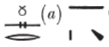 : The reading is not entirely certain, and it is unclear if this is an epithet or a divine name for the ram-headed crocodile. LGG VII, 128a, cites only this example, tentatively translating: “Der das Land erleuchtet.”↩︎
The element for “Re” is damaged, but Sauneron suggested it might be:
 . Thus a graphic allusion to Re emerging from the flood, as described in the present text.↩︎
For this step of the temple foundation ritual, see recently Laroche-Traunecker 2020, pp. 85-86.↩︎
 - For similar spellings of wbn, see Klotz 2014b, p. 34, n. b (to which this example should be added).↩︎
 : This same phrase occurs in the related scene with a similar spelling of snṯ [Esna II, 113], 2; a more conventional spelling in [Esna II, 113], 1, confirms the reading. The reference is to the king “filling” (ḏbȝ; Wb V, 558, 12) the excavated temple foundation with sand. Cf. Laroche-Traunecker 2020, pp. 85-86.↩︎
The same Hapi shows up in Esna VI, 539, 58-61 (14). His name appears to mean “the flood that revises at his moment,” perhaps a reference to territorial boundaries requiring new inspections after the annual Inundation.↩︎
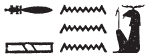 - The spelling of Khnum alludes to the prominent belly of Hapi, while the second two signs are aquatic. Same spellings in Esna III, 211, 18; 294, 12; Esna VII, 628, 5.↩︎
These are the two categories of Egyptian fields: cf. Meeks 1972, pp. 56, n. 18; 147-148.↩︎
Lit. “the field who is bent over (from the weight of) carrying her products.” A divinized field with a similar name (but without ks) appears in Esna VI, 539, 30-33 (7).↩︎
 - The baboon sign elsewhere writes ḏd-mdw (Kurth 2007, p. 204, No. 103). Since it refers to grain here, I tentatively suggest this is ḏdȝ (baboon = ḏd), tall bread sign = dȝ < dỉ), “to be fat.” Elgawady 2016, p. 210, n. 1519, suggested reading this sign as spd, “ausgestattet mit/versehen mit,” i.e. s (baboon) + spd.↩︎
Shai was an agathos daimon serpent, connected with food products. I don’t know of parallels for this epithet, but Khnum is elsewhere “the Ka serpent who made Kas.”↩︎
For this divine and royal epithet related to fields and food production, cf. Inconnu-Bocquillon 1989.↩︎