Intercolumnar Wall A (79-85)
Esna 79
- Location: Facade, Intercolumnar A
- Date: Domitian
- Hieroglyphic Text
- Bibliography: None
Cartouches of Domitian.
Esna 80
- Location: North-East Door, exterior, lintel
- Date: Probably Domitian
-
Hieroglyphic Text
- Bibliography: Sternberg 1985, pp. 80-84; see also Tempeltexte 2.0
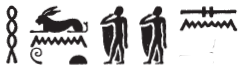
1[…] Rʿ
ḥwn.tw=sn ỉs m-ḫnt=f
rhn=sn r=f
m rdỉ st Rʿ r tȝ
rwḏ rd.wy ḥm=f
ḥnʿ ḥm.wy=sn
r ỉȝ.t tn
ḏr nỉw.t pw
nty nb ʿnḫ
1 […Neith….] Re,
they rejuvenated194 within it,
they rested there,
when Re gave birth to them.
The legs of his majesty were set,
along with their majesties,195
towards (going to) this mound,
since it is the city
of the Lord of Life.
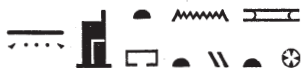
ḏd.ỉn Rʿ n šw Tfn.t
ḫpr=tn dy
2[…]
[…]
ỉw[=k] m ỉwn n ʿnḫ
ỉw sn.t[=k …]
[…]=ṯn pw ḏr-bȝḥ
ḏd.tw ỉwn m rn n šw
Iwny.t m rn n spȝ.t=tn
Then Re said to Shu and Tefnut:
You shall stay here
2 […]
[…]
[You] are as an air-pillar of life,
[your] sister […]
it is your […] since the beginning.
Thus one says ‘Iun’ as the name of Shu,
and ‘Iunyt’ as the name of this district.
šd s.t mw.t=f N.t
m ḥḏ.t=s
ỉw=sn m [sbk.wy…]
3[…]
ẖnmw m ršw ḥnʿ=t
ntt nb n ww
ḏd.tw n=s Nb.t-ww
ỉtn=s(n) m ỉtn.wy
ỉb.w ḥtp […]
[…] n ḏr-ʿ
Their mother, Neith, nursed them
with her white milk,
they being as [two crocodiles…]196
3 […]
being united with you in joy,
you [are] the Lady (nb.t) of the Terrain (ww),
thus she is called ‘Nebtu.’
They shine as the two disks,197
hearts are quiet(?) […]
[…] since the beginning.
ỉb=f ȝw[…]
4[…]
[…].n=f wʿ n ḫmt
sšm n sn.wy
wrš=f ỉm
ḥr zȝ n ḥm n Rʿ
wbn Rʿ r mȝȝ=sn
m ẖr.t-hrw
ẖnm=f st
m bȝ ḥr-ỉb ṯȝ.wy=f
ḫpr ỉȝ.t-ṯȝ.wy
m rn n ỉȝ.t tn
5 […]
His heart is glad […]
4 […]
[…] he […] one of the three,198
guide of the two siblings,
he stands guard there,
protecting the majesty [of] Re.
Re rises just to see them,
every day.
He unites with them
as the Ba amidst his chicks,199
thus ‘Mound of the Chicks’ came about
as the name of this mound.
5[…]=s r tr r [tr]
[…]
ẖnmw pȝ nḫy nfr
m gs-dp.t
ḥr sḥr ḏȝ.t m r’-wȝ.t=sn
6[…]
[…] m Nwn
sḫȝ.n ỉb=f Iwnw […]
[…]
nʿỉ=f r=s
m šmʿ-nfr
šȝy-nfr zȝ nỉw.t=f
zbi.n=f ḥb.w
nỉ wšr
7s.t [pw nt] nbỉ
n qdỉ-qdỉ.w
šms nṯr ʿȝ m ḥḏ=f
tȝ-ṯnn pw
ỉr nn r-ȝw
[…] ḥr tȝ […]
m-ḫm kȝ=f
p.t tȝ mn.tw r nḥḥ
nb nḥp mn.tw
r ỉḫt=f
ỉw=f ḥr ỉr(.t) nt.w-ʿ=f
mỉ sf
nỉ ȝb rʿ-nb
5 she […from] season to [season]
[…]
Khnum the Good Protector
is on guard,
repelling evil from their vicinity
6 […]
[…] from Nun,
his heart remembered Heliopolis (Iwnw) […]
[…]
he went towards it,
as Shemanefer,
the good Shai-serpent200 who protects his city,
having run through festivals,
without fail.
7 [It is] the place fashioning,
[for] the Builder of builders,
who directs the great god [in] his shrine,
that means Tatenen,
who made all of this.
[…] on earth […]
without his Ka knowing.
Heaven and earth remain forever,
the Lord of the Potter’s wheel remains
at his things,
he carries out all his actions,
just like yesterday,
without cease, every day.
Esna 81
- Location: North-East Door, exterior, left
- Date: Probably Domitian
-
Hieroglyphic Text
- Bibliography: Sternberg 1985, pp. 86-91 (only 1-5); see also Tempeltexte 2.0
1ỉr ỉȝ.t tn
tȝ-sn.t rn=s
spȝ.t pw nt N.t
m tȝ šmʿ ḥr ỉmnt.t
mỉt.t N.t=s
m tȝ-mḥw ḥr ỉȝbt.t
mw.t-Rʿ pw
ḏr ỉw=s ḥnʿ=f
r nỉw.t tn
ẖnm=f qmȝ sw
Ptḥ tȝ-ṯnn
ḫnt ʿ-rsy
m rn=f n
ẖnmw wr ỉt-ỉt.w
gm.n=s ỉȝt t(n)
m ḥr-ỉb n.t
ỉr=s s.t=s ỉm
2ḏd.tw tȝ-sn.t
m rn n spȝ.t tn
1 As for this mound,
Esna is its name.
it is the district of Neith
in Upper Egypt in the West.
A copy of her Neith nome
in Lower Egypt in the East.
She is the Mother of Re,
when she came with him
to this city.
He joined his creator,
Ptah-Tatenen
within the Southern District,
in his name of
Great Khnum, Father of Fathers.
She found this mound
within the n.t-waters,
and she made her seat (s.t) there.
2 Thus one says ‘Esna’201
as the name of this district.
šm ḥm=s ḥr mḥ.t n nỉw.t tn
pr-ẖnmw n sḫ.t rn=f
ỉȝ.t nṯr.y
nỉ mỉt.t=s
ḏsr.tw wr.tw
ḫnty nỉw.wt spȝ.t
nn ḫnd=s ỉn ʿ.wt nb
ỉr ʿr z.t r=s
ḫpr ḫry.t m tȝ-r-ḏr=f
ʿḥ pw ḫpr […]
ḏr=f […]
3[…] nṯr ʿȝ m zp-tpy
štȝ.t m ẖnw=f
s.t ḥȝp sḫr.w
n Wsỉr nb-ʿnḫ
ḥnʿ ḏȝỉs.w wr.w nw Mḥ.t-wr.t
nty(.t) ỉmn(.t) m-ḫnt=s
Her majesty went north of this city,202
Per-Khnum of the Field is its name.
It is a divine mound,
without its like,203
sanctified and great,
foremost of cities and districts.
No animal should tread over it;
if a woman approaches it,
disaster will befall the whole world.204
It is the palace which came about […]
entire […]
3 […] the great god in the first time.
The crypt is in it,
the place of hiding the condition205
of Osiris206 of Neb-Ankh,
along with the great Djaisu of Mehet-weret,
who are hidden within it.
nḫỉ=s zȝ=s Rʿ ỉm
ḥnʿ zȝ=f šw
ḥtm=s ʿȝpp ḥnʿ zmȝ.w=f m
[…]
4wn tfn.t ḥr mnỉ r nỉw.t tn
m ỉỉ=s m Kns.t
mȝȝ=s sn=s m nb-pḥty
m ẖnw n ww.t ṯn nfr
ỉr.n=s ḫprw [m …]
[…] r ȝw […]
ỉw=f ỉm
ỉr=f n=s 5wrh
sqȝ=f ḥm=s
ỉmȝ ỉb=sn m zp-wʿ
She protects his son, Re, therein,
as well as 207 his son Shu,
she destroys Apophis and his followers
in […]208
4 Tefnut stopped at this city,
on her return from Kenset (Nubia),
she saw her brother as the Lord of Strength,
within this good field.
She made her transformation [into …]209
[…] entirely […]
he is therein,
he made the wrh-dance 5 for her,
he elevated her Majesty,
and their hearts delighted together.210
mȝʿ-ḫrw ỉn ḥm=f
m wp.t=f nb
wd=sn qn
n wḏ=s
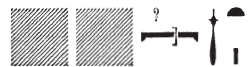
m ḥb=f [nfr n] wḏʿ-mdw
[…] spȝ.wt
ỉb=s nḏm(.w)
ỉw.tw r mȝȝ=f m mȝʿ-ḫrw
[…] m ỉhy
m ḥb pn nfr
n 4-nw n ȝḫ.t 1/30
n ḥb kȝ-ḥr-kȝ
6wpy ʿȝ ḫr.tw […]
[…]
mȝȝ nfrw n ỉtn.wy
Then his majesty was justified,
in all his trials,
and they caused suffering,
at her command,
in his [good] festival [of the Decision]211.
[The gods of cities and] districts,212
their hearts are pleased,
one comes to see him in justification,
[…] in jubilation,
in this good festival,
of IV Akhet Day 1 (= 1/30),
in the festival of Khoiak,213
6 also called ‘the great wpy-festival’
[…]
seeing the beauty of the two disks.214
ȝḫ.t ȝḫ[ȝḫ.tw…]
wȝḏwȝḏ […] ʿntyw wr
wr m ḫnm=f nḏm
sḫ.t nfr.t m grgb
n wpy
tȝ-sn.t m ḥb
pr-nṯr m ḥʿʿ
ḥw.t-ṯȝ.wy m ȝw.t-ỉb
nỉ ȝb rʿ-nb
The field is radiant […]
verdant […] great myrrh,
with his sweet smell.215
The good field is overwhelmed
from the wpy-festival.216
Esna celebrates,
Per-netjer rejoices,
the Temple of the Chicks is delighted,
without fail, every day.
Esna 82
- Location: North-east door, right side
- Date: Domitian
-
Hieroglyphic Text
- Bibliography: None
1ʿnḫ nṯr nfr
wṯt n ẖnmw
zȝ smsw n ḥry-wḏb
nb-tȝ.wy
(tmdyns nty-ḫwỉ)
nỉs=f n=k [ỉt]=f
ẖnmw-Rʿ nb sḫ.t
ḏfn mnḫ
ḫnt ḥw.t-ỉt
wr-šfy.t
mȝỉ ʿȝ-pḥty
nw.w mn.ty ẖr s.t-ḥr=f
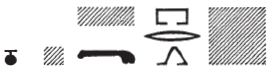
ỉnk [pr.t] pr [ỉm=k?]
pẖr ns.t=k ỉm=ỉ
ȝb ỉb=k
Live the good god,
begotten of Khnum,
eldest son of the ḥry-wḏb,217
Lord of the Two Lands,
(Domitian Augustus)
He calls to you, his [father],
Khnum-Re Lord of the Field,
beneficent ancestor
within the Temple of the Father,
great of prestige,
lion, great of strength,
the waters and mountains are under his control:
“I am the [seed] which came forth [from you?],218
I am your successor,
whom your heart desired.
2mỉ m ḥtp
ẖnm=k pr-nṯr
s.t=k ḏr pȝwty.w
sḫ.t nfr.t
ḥtp ḥm=k m-ḫnt=s
swȝw.w=s n=k m ʿbw
ḥr(.t) n bȝ=k
ḏd.t n smn.w=k
ỉmḥ.t n ḥtpty.w
ỉw=k m ḥtp
sḫn=k ḥw.t-[ṯȝ.wy?]
[s.t]=k pw
ȝḫ m ỉb=k
bw.t [kȝ]=k
wȝỉ.tw m ỉfdw=s m ḏ.t
2 “Come in peace!
and enter Per-netjer,
your place since the (time of) the primeval gods,
the beautiful field
in which your majesty settles,
its areas belong to you in purity.
“(It is) a heaven for your Ba,
an enduring place for your statues,219
a necropolis for the departed ones.
“Come in peace!
and unite with the Temple [of the Chicks?],220
it is [your place],
excellent in your heart.
“The abomination of your [Ka]
is far distant from its four corners forever.”
Esna 83
- Location: North-East door, right side of lintel
- Date: Uncertain
-
Hieroglyphic Text
- Bibliography: el-Sayed 1982, p. 623, Doc. 1006 (partial)
The King
nsw.t-bỉty
(wytkrtr ksrs)
zȝ-Rʿ
(tymtyns nty-ḫwỉ)
mhr nfr
The King of Upper and Lower Egypt
(Autokrator Caesar)
Son of Re
(Domitian Augustus)
the good dairy worker.
Neith
ḏd-mdw ỉn N.t-wr.t
mw.t-nṯr nb.t tȝ-sn.t
nṯr.t-ʿȝ.t ḥn.t Mḥ-n.t
mw.t n Rʿ
šȝʿ.t ḫpr m ḥȝ.t
sʿnḫ ṯȝw n zȝ=s
m ỉȝ.t-ṯȝ.wy
Words spoken by Neith the great,
Mother of God, Lady of Esna,
Great Goddess, Mistress of the Mh-n.t,
Mother of Re,
who began creation in the beginning,
who keeps alive the child(ren) of her son,
in the Mound of the Chicks.
Esna 84
- Location: North-east door, left side
- Date: Probably Domitian
- Hieroglyphic Text
- Bibliography: None
1[…]
[…kȝ.t ʿ.wy?]=f
grg spȝ.wt nỉw.wt
ḏd.ỉn Rʿ n [zȝ]=f šw
šm=k […]
[…]=k tȝš n nṯr nb n=f
ḫntỉ=sn r nỉw.wwt rsy.wt
r bw nty ỉw mw.t-nṯr ỉm
rsy-nỉw.t pw
ḏd.ỉn šw n Rʿ
s.t tn tȝ pw […]
1 […]
[…the work of] his [hands?] 221
settles nomes and cities.
Then Re said to his [son], Shu:
“May you go […]
you […] the area of every god for him.”
They went upstream to the southern cities,
to where the Mother of God (Neith) was,
That is: south of the City (Rs-n.t).222
Then Shu said to Re:
“This place is the land of […]”
2 [….]
[…ḏd].tw [ḫnt]-tȝ
m rn n spȝ.t tn
ḫpr ḫnsw ḏḥwtỉ m s.t tn
m ḥb dndn
m-ẖnw pr pn ḥr=s
r-mn hrw pn
2 […]
Thus one [says Khent]-ta
as the name of this district;223
Khonsu-Thoth 224 came about in this place
in the Festival of Fury 225
within this temple for that reason,
until today.
3 […]
[…] sḫȝ ỉb=sn
ḥnʿ ỉt=sn mw.t=sn
4 […]
nhm.tw n kȝ=s
[…]
[ʿq m pr] pn
[m wrḏ?]-ỉb
pr=f m snb-ỉb
sḫr.w n tȝ-r-ḏr=f
m ḥr=s
3 […]
[…] their hearts recall,
with their father and mother.
4 […]
one rejoices for her Ka […]
[…]
[if one enters] this [temple]
[in ill] health(?),226
he leaves it in good health.
The condition of the entire world
is before her face.
Esna 85
- Location: North-east door, right side
- Date: Probably Domitian
- Hieroglyphic Text
- Bibliography: el-Sayed 1982, p. >>, Doc. 1031.
1rȝ mḥty [Iwn]y.t […]
[…]
[…] ḥw.t-mw.t
mw.t-nṯr Rʿ wr.tw m-ẖnw=f
s.t=s ʿḥʿ ḥm=s m tȝ-šmʿ
ṯnỉ.tw r mn.t
ẖr ỉtn.wy
wbn=s m-ḫnt=f
mỉ wn=s ḫnty ḥr.t
ḫʿỉ=s r tr=s
m ỉrw=s n ỉwnt.t
m 2ḥb=s nfr ḥb-N.t
[…]
1 The northern door of [Iu]nyt […]
[…]
[…] the Temple of the Mother.
The Mother of God is great therein,
Her throne, where she stays in Upper Egypt,
more distinguished than the sky
bearing the two disks.
She rises within it
as if she were in heaven,227
she appears in procession at her season
in her form of the Archer,
in her 2 good festival, the Festival of Neith
[…]
[…]
[…] wr
ṯ.t=s dns.tw m ḥtp.w-nṯr
sḥ.w=s ʿpr.tw m nṯry
ʿḥ=s ḥnʿ.tw m ỉbr
nỉ gm wš m ḥw.t-nṯr=s
r-ʿ nḥḥ
ḫpr Mḥ-N.t m rn sḥ
ḥr ỉȝb n r-pr.w nb
r mn hrw pn
[…]
[…] great,
her altar is heavy with offerings,
her chambers are equipped with linen,
her palace is stocked with ỉbr-unguent.
Nothing is found to be missing in her temple,
until the end of eternity.
Thus Mḥ-n.t is the name of the [shrine] 228
on the left of every temple
until this very day.
3mȝȝ […]
[…]=s ḫnt ḥr.t
psḏ.t=s ḥr wnm-ỉȝb
mỉ gnẖ.w ḥr šms=s
zȝ=s Rʿ m šww ỉmỉ.tw=s
ỉwr(.w) r ms.t=f
rʿ-nb
4 ʿq=f ḥw.t-N.t
r mȝȝ mw.t=f
ršw ỉb=f
ḥr mȝȝ ṯȝ.wy=f
ṯḥn.wy ḫnty pn nfr
wr.wy sy
r nty ẖr-ḥȝ.t
pẖr(.w) m sš.w
nḫb(.w) ḥr rn wr
ʿpr.tw ḏsr.tw ẖr ỉm[=s?]
ḥr swr šfy.t n mw.t-nṯr
ḥnʿ psḏ.t=s
ḏ.t nḥḥ
[…] sees […]
[…] she […] within the sky,
her Ennead on the right and left,
like the stars in her following.
Her son Re is the sun within her,
being pregnant in order to birth him
every day,
4 he enters229 the Temple of Neith
in order to see his mother,
and his heart rejoices
from seeing his two children.
How scintillating is this good forecourt!
How much greater it is
than what was there before!
Inscribed with all writings,
carved in the great name (of the king),
equipped and made sacred with [its] contents,
magnifying the prestige of the Mother of God,
along with her Ennead,
for ever and for all eternity.
 - Sternberg 1985, p. 92, n. b, translated ḥwn.wy=sn, “ihre Sprößlinge”.
This translation is based on the parallel in Esna II, 31, 60 (not mentioned by Sternberg), also concerning Re and Neith: “they rejuvenated their bodies in the form of the children of Re (ḥwnw ḏ.t=sn m ṯȝ.wy n Rʿ)”; cf. Fernández Pichel 2018, p. 136.↩︎
- Sternberg 1985, p. 92, n. b, translated ḥwn.wy=sn, “ihre Sprößlinge”.
This translation is based on the parallel in Esna II, 31, 60 (not mentioned by Sternberg), also concerning Re and Neith: “they rejuvenated their bodies in the form of the children of Re (ḥwnw ḏ.t=sn m ṯȝ.wy n Rʿ)”; cf. Fernández Pichel 2018, p. 136.↩︎Shu and Tefnut.↩︎
Possibly understanding an allusion to Shu and Tefnut as the two baby crocodiles nursed by Neith, as in Esna 104, 7 (ỉw=sn m sbk.wy)↩︎
Restored based on the parallel in Esna II, 31, 39; for Shu and Tefnut as the two disks, see also Esna 81, 6; Esna III, 346, 22.↩︎
 - This is a reference to Thoth in North Esna; cf. Klotz 2014b, p. 38, n. b. Based on the examples in Esna III, 309, 27, and Esna VI, 493, 9, the two birds here write sn.wy, “the two (siblings)” (i.e. Shu and Tefnut), and not bȝ.wy (contra Sternberg 1985, p. 83, n. o).↩︎
Similar narrative, from “one of the three” to “Ba amidst his chicks” in Esna II, 31, 62-63.↩︎
 - This spelling of Shemanefer links him with the agathos-daimon serpent Shai.↩︎
 - That is: “the seat of the n.t-waters”.↩︎
Neith journeys north of Esna to Per-Khnum in her great hymn: Esna 163, 26ff.↩︎
Very similar, misogynistic parallel describing Per-netjer in Esna 127, 10; Esna 156, 20; Esna III, 196, 2, and elsewhere.↩︎

 - Note the spelling of Osiris, with initial w derived from ww, “cultivated area”, and thus linked to the visit by Isis-Nebtu to the fields and this necropolis described later on. Same spelling in Esna 110, 7; Esna 163, 20.↩︎
 - Reading suggested by Sternberg 1985, p. 91, n. p. This might alternatively write prỉ, “to come forth”, alluding to Shu rushing to his father’s defense in North Esna.↩︎
In more detailed accounts (Esna 129, Esna III, 192), Khnum-Shu the Good Protector is the hero who destroyes the enemies of Re. In this version, centered initially around Neith, the goddess plays the active role.↩︎
An allusion to the Myth of the Wandering Goddess. Here Tefnut reaches North Esna, sees Khnum-Shu as a mighty warrior (i.e. Onuris), and she transforms into the kindly, human-faced Nebtu. Since the text later describes the festival of Khnum at North Esna on 1 Khoiak, this also relates to Nebtu’s visit there on the same occasion; cf. Sauneron 1962, pp. 58-60.↩︎
The famous wrh-dance of Shu for Tefnut-Menhyt-Nebtu at Esna takes place specifically at North Esna during the festival of 1 Khoiak: cf. Sauneron 1962, pp. 60-62. A similar phrase occurs in a description of that festival: Esna III, 346, 23 (ỉr=f n=s wrh, sqȝ=f ḥm=s).↩︎
 - Emended after close parallels in Esna 127, 8; Esna III, 337 B; 346, 22. For the “festival of the decision” which also coincided with 1 Khoiak, see Sauneron 1962, pp. 63-65.↩︎
Restored after Esna III, 337 B; 346, 22.↩︎
For references to the “great wpy-festival” of 1 Khoiak, named after the “judgement (wp.t),” see Klotz 2014b, p. 55, n. 118 (correct the interpretation of the date given there, where I did not recognize the fractional notation).↩︎
Presumably Shu and Tefnut. See in the same festival context Esna III, 346, 22; and Esna 80, 3; Esna 127, 9,↩︎
These are the great scents of the revitalized field (sḫ.t-nfr.t) of North Esna after Khnum-Shu and Nebtu enter it: cf. Sauneron 1962, pp. 59-60. Presumably the masculine pronoun “his” refers to Per-netjer, or possibly Khnum-Shu.↩︎
Exact parallel in a hymn to Khnum-Shu and Nebtu on 1 Khoiak: Esna III, 346, 24; also 351 B. For the term grgb, see Wb V, 190, 8.↩︎
Royal and divine epithet, difficult to translate (lit. “chief of the cultivable areas near the river banks”), often associated with Shu as provider of divine offerings, and thus also appropriate to Khnum Lord of the Field. Cf. Inconnu-Bocquillon 1989.↩︎
 - Reading uncertain. Presumably the king is telling Khnum he is his child, as in the symmetric scene Esna 59, 1: “I am he whose body is alive, who came forth upon your potter’s wheel.”↩︎
 - The correct transliteration is confirmed by Esna II, 4, 11.↩︎
Tentatively restored after the similar parallel in Esna VII, 642, although this could easily refer to a different toponym.↩︎
Tentative restoration based on Esna 61, 1 and 6-7; Esna 177, 11.↩︎
Another pun on Esna as the place “south of the City (Thebes)” and the Rs-n.t chapel of Neith: cf. Esna 80, 2 (etymology made by local Thebans), and Esna 63, 1. Thebes was frequently referred to simply as “the City.”↩︎
Restoration suggested by Sauneron 1963a, p. 181, n. a. Presumably, Shu’s damaged speech that began mentioning a “land (tȝ)” also mentioned the term ḫnt or a homophone.↩︎
Sauneron 1963a, p. 181, n. a., noted the names Khonsu and Thoth acrophonically evoke the name of Khent-ta.↩︎
The “moment of fury” is mentioned in relation to Neith in Esna 102, 2, but it that is not necessarily associated with the present text. Khonsu-Thoth is mentioned in a procession with Heka on Paophi [1?] (Esna II, 55); while in Esna VII, 563, 9, the same god is said to “chop off the head of the furious one (ḥsq tp n dndn).” Daniel Arpagaus (personall communication) notes this most likely refers to killing the oryx, enemy of the sun, which might also be related to the apparent cutting up intestines on the same Paophi festival.↩︎
 - The precise negative adjective of the heart is unclear, but it clearly contrasts with snb-ỉb mentioned next.↩︎
Similar phraseology describing Neith’s procession in the symmetric text, Esna 64,1.↩︎
It’s unclear what etymology is being referred to here. Possibly the preceding statements about how Neith’s temple chapels are “filled (mḥ)” with all good things?↩︎
 - The serpent appears to be serving double duty as the verb and the suffix pronoun. Alternatively, this could be a participle in apposition to Re: “He who enters the temple of Neith…”↩︎