Column F (187-193)
Esna 187
- Location: Column F, Middle Bandeau
- Date: Domitian
-
Hieroglyphic Text
- Bibliography: None
Esna 187 A
Answ.t-bỉty
Nwn-wr […]
ʿšȝ-ms.w
mȝỉ-ḥzȝ
ḫnt tȝ-šmʿ tȝ-mḥw
nṯr.w spȝ.wt snḏ(.w)
n snḏ=f
ẖnmw-Ptḥ ỉr wnn.t
A King of Upper and Lower Egypt,
Great Nun […]
great of children,
Fierce lion
within Upper and Lower Egypt,
the gods of the nomes are in fear
for fear of him:
Khnum-Ptah, who made what exists.
Esna 187 B
Bnsw.t-bỉty
qȝ šw.ty
nb wrr.t
ḫpr ḏs=f
ỉwty ỉd.t ms.t=f
ḫpr=f m rw(?)
r smȝ ḫfty=f
ẖnmw-Rʿ
pȝ mȝỉ nhs
B King of Upper and Lower Egypt,
high of double plumes,
lord of the double crown,
who came into existence himself,
no womb gave birth to him.
He transformed into a lion(?) 551,
to slaughter his enemy:
Khnum-Re,
the guardian lion 552.
Esna 188
- Location: Column F, Middle Bandeau
- Date: Domitian
- Hieroglyphic Text
- Bibliography: None
Cartouches of Domitian with Khnum-Re Lord of Esna and Khnum-Re Lord of the Field.
Esna 189
- Location: Column F, Middle Bandeau
- Date: Domitian
-
Hieroglyphic Text
- Bibliography: None
189 A
ʿnḫ nṯr nfr
ḫws Iwny.t
mỉ ȝḫ.t n.t p.t
ḫwỉ šzp.w=sn
mk ʿḫm.w
nb-ḫʿ.w
(twmtyns ḫwỉ)
mrỉ ẖnmw-Rʿ nb tȝ-sn.t
Live the good god,
who builds Iunyt,
like the Akhet of heaven,
who protects their statues,
and guards the effigies.
Lord of appearances,
(Domitian Augustus)
beloved of Khnum-Re Lord of Esna.
189 B
ʿnḫ nṯr nfr
zȝ ẖnmw
wr wr.w
ḥwỉ ḫȝs.wt
m ḥqȝ.n=k tȝ.wy
m qn nḫt
nb-ḫʿ.w
(ȝwtwgrtr ksrs)
mrỉ ẖnmw-Rʿ nb sḫ.t
Live the good god,
son of Khnum,
greatest of the great,
who smites the foreign lands,
since you ruled the two lands (Egypt)
in valor and strength.
Lord of appearances,
(Autokrator Caesar)
Beloved of Khnum-Re Lord of the Field.
Esna 190
- Location: Column F
- Date: Domitian
-
Hieroglyphic Text
- Bibliography: Sauneron 1959, pp. 71-72 (partial translation and summary); see also Tempeltexte 2.0
1sʿr.w nn
[…]
ḥm=k ẖnmw
pȝ mnỉ nfr n tpy.w-tȝ
ỉmy-rȝ ỉḥ.w wr
ʿšȝ mnmn.w
ṯwf pw
swtwt=k r mȝȝ=f
nḥb=k wrry.t=k
r ʿq=f m-ẖnw wʿ wḫȝ
spr=k ȝḫ-bỉ.t
m km n ȝ.t
2ʿ[q.n]=k pr=k
m nḏm-[ỉb]
[…]
1 This hall of papyrus stalks553
[which are in front of]554
your majesty, Khnum,555
the good herdsman of those on earth,
Great Overseer of Cattle,
numerous of livestock:
It is a reed marsh,
which you travel to behold.
You harness your chariot556
to enter it within a single night,
and you reach Chemmis
in the completion of a moment.557
2 You en[tered] your domain
in happ[iness]558
[…]
[…] wn ỉm=f
mỉ wn ỉm=f
pẖr(.w) m mw
ẖr pȝy.w
ẖnm.t=sn ẖr rm.w
ȝḫȝḫ.tw m sm.w
wȝḏwȝḏ(.w) m np(r)y nb.w
ʿpr(.w) m kȝ.t ỉd.wt
m ḫprw [nb].w n ỉnm
m ʿw.t[-nṯr] ḥr rn=f
[…] which is in it,
is like that which is in it.
It is surroundwd with water,
filled with birds;
their basins contain fish;
it blossoms with plants,
it is verdant with all grains.
It is equipped with bulls and cows,
in [all] varieties of color,
as animals [for each god],
by name:559
3ḥḏmy.t n Rʿ
ȝty n gnḥ-Rʿ
ỉzty.w n Ptḥ nfr-ḥr
kmy.t n ḥr
dšr.w n Swtḫ
rnn.w n Is.t
mnn.wt n Nb.t-ḥw.t
tȝy.wt n Tnm
hkȝy.w n ḥqs
ẖsy.w n Sḫȝ.t-ḥr
4wry.t n Sšȝ.t
gnḥy.w n Gbb
ỉd.wt n Nw.t
ṯrḥy.w n ḫnsw
mḥy.wt n ḫnsy.t
wḏy.wt n ḫnty-ẖty
ʿby.w [n …]
ʿmy.wt n Bȝ
rḫ.w n 5Rnn.t
sȝbqy.w n [Sbk?]
wnš.w n pr m sn.wt
hȝby.wt n ḥʿpỉ
nbsy.wt n N.t
tȝy.wt n nb=f
ḥqy.w n ḥpḥp
[…]
[…] n nb sḫt=f
ʿbʿb.w n
mȝȝ-ỉn.tw=f
6mnw.w n nṯr.w nb.w
bḥs.w 7(n) nṯr.w ỉmy.w p.t
The ḥḏmy.t-cow for Re,
the ȝty-bull for Dark Re(?),
the ỉzty-bulls for Ptah Beautiful of Face,
the black cow for Horus,
the red bulls for Seth,
the young bulls for Isis,
the mnn.t-cows for Nephthys,
the tȝy.t-cows for the Wanderer,
the ḥky-bulls for Heqes,
the ẖsy-bulls for Sekhat-Hor,
4 the great cow for Seshat,
the dark bulls for Geb,
the cows for Nut,
the ṯRḥy-bulls for Khonsu,
the mḥy.t-cows for Khonsit,
the wḏy.t-cows for Khenty-Khety,
the ʿby-cows [for ….]
the ʿmy.t-cows for the Ba,
the smart bulls for 5 Renenutet,
the sȝbqy -bulls for [Sobek?],
the jackals for He who Comes for Senut,560
the hȝby.t-cows for Hapi,
tne nbsy.t-cows for Neith,
the tȝy.t-cows for His Lord,
the ḥqy-bulls for Hephep
[…]
[…] for Lord of sḫt=f,561
the ʿbʿb -bulls for
He who sees his Father,562
6 the mnw-bulls for all the gods,
the calves 7 (for) the gods within heaven.
mnỉw nn m zȝ n ḥʿw=k
8m ʿnḫ-ḏd-wȝs
ʿn n=k ḥpỉ m kmy.w
9nr.w=k m pr-wr
mdw=k ḥr tȝ 10 ỉty
zȝ=k mnỉ.w n.w ỉḥ.w ḫȝ.w
These herders protect your body,
8 with life, endurance, dominion.
Apis wails for you with black bulls,
9 and your nr-bulls are in the Per-wer.
You speak upon earth, 10 Sovereign:
may you protect the herders
of thousands of cattle.
Esna 191
- Location: Column F
- Date: Domitian
-
Hieroglyphic Text
- Bibliography: See also Tempeltexte 2.0
11dgȝ ỉr=f tn
pʿ.t rḫy.t
ỉ.ỉr n=f 12hn
nṯr.w nṯry.t
mỉ=n dwȝ=n s(w)
m.k 13nb=tn pw
ỉ.ỉr ỉȝw n bȝ n Rʿ
14ḥqȝ tȝ.wy
msw.t ḥry-srḫ
tȝ.wy ỉdb.w
15r nḏy n ḥm=f
gs.w-pr.w ḫtỉ(.w) ḥr rn=f
16nn nṯr twt r qd=f
nsw.t nṯr.w
wʿ wʿw
nn spȝ.t šw m rn=f
m ȝbw r-mn pds.wt-nt-š
May you behold him,
nobles and commoners:563
perform564 hn-praise 12 for him!
Gods and goddesses,
come, let us worship him!
Behold, 13 he is your lord.
Make praise for the Ba of Re!
14 Ruler of the two lands,
the image upon the serekh,
all lands and shores
15 are subject to his Majestyl
Temples are inscribed in his name,
16 there is no god equal to his form.
The King of the Gods,
truly unique.
There is no district empty of his name,
from Elephantine to the Mediterranean Coast.565
p.t n bȝ=f
tȝ n twt.w=f
rwty ḥm-nṯr=sn
ḥr rn=f
(ḥr) qmȝ snỉ-tȝ
n ḥm=f rʿ-nb
nb šfy.t
ḫnt ḥw.t-ỉt
ỉty ḥqȝ wȝḏ.ty
17ḫr(.w) n šfy.t n bȝw=f
sr wr ḫnty pr-ʿnḫ
nb=tn
ʿnḫ=tn ỉm=f
Heaven is for his Ba,566
the earth is for his statues:
their priests go around567
creating proskynesis
for his Majesty, daily.
Lord of prestige
within the Temple of the Father;
Sovereign, Ruler of the Two Uraei;
17 (One) falls down for the prestige
of his awesome power.568
Great ram, foremost of the House of Life569
your lord,
through whom you live.
ỉw m rnp r tr=f
nn ȝb
ỉw.n=f m ḥʿpỉ
sṯȝm.n=f ȝḫ.t
dỉ[=s] r tȝ
r dmḏy.t=s
m wȝḥy.t
pḥ.tw nn qn
(ḥr) ỉr(.t) ẖr.w n rȝ nb ỉm=sn
He who arrives rejuvenated at his time,
without fail.
As he arrived as Hapi,570
so he covered the field,
so [it] might ‘give birth’
at its appointed time,
consisting of grain
being numerous, without shortage:571
making food for all mouths thereby.
18ḥr.n=f s(w) r ḥr.t
m ḥr-ȝḫty
šzp.n=f ȝḫ.t
m ʿpy šps
wbn=f m wnm.t=f
m psḏ m nbw
sḥḏ.n=f tȝ.wy
m nfrw=s
ḫʿỉ=f m ỉȝbt.t=f
m ỉwn-ḥʿʿ
r šzp tȝ m-ḫt hrw
ỉw.n=f m ṯȝw nḏm
r sḏdȝ np(r)y
mḥy.t
ḫsbḏ šdy.wt
19wbn m šww
bs m ḥʿpỉ
pr sʿr n.t
m-qȝb=f
18 He removed (ḥr) himself to the sky (ḥr.t)
as Horakhty (ḥr-ȝḫty);
he reached the Akhet
as the august winged scarab.
He shines in his right-eye
as He who Shines in Gold,
having illumined the two lands
with his perfection.
He appears in his left-eye
as the moon,
to illumine the earth after the day.
He arrived as a pleasant wind
to fatten the grain:
(namely) the north wind,
who makes blue the flooded fields.572
19 He who shines as the sun,
who surges as the Inundation,573
from whose innards
the wind and waters come forth.
ḫntỉ=f rsy.t
m bȝ n Rʿ
nb Qbḥw
kȝ.tw r kȝ=f
ḥw.t=f štȝ(.t) m snm.t
wbn m ḫnt=s
m ỉṯ-kȝ
bʿḥ tȝ.wy nb.w
nn qn-rnp.t
nhm.tw n=f
m-ẖnw ḥȝ.t-spȝ.wt
20[s.t]-ỉb=f n ʿ-rsy
ẖnw n ḥm=f
m šȝʿ ḫpr
nhq.n ỉb=f
r qdỉ m-ḫnt=s
ḏd.tw bȝ n Rʿ r=f
ẖnmw nb Qbḥw pw rn=f
bȝ šps m zp-tpy
nbỉ nbỉ.w
šȝʿ šȝʿ.w
ỉr nty
sḫpr ḫpr
He went upstream to the south,
as the Ba of Re,
Lord of the First Cataract,574
so his Ka is called.575
He hidden temple is in Biggeh,
he who rises from within it
as the ỉṯ-kȝ-flood,
who floods all the lands,
without any year of famine.
One rejoices for him
within Beginning of the Nomes (Elephantine),
20 his favorite [place] in the southern district:
the Residence for his Majesty,
at the beginning fo creation.
He was inspired576
to start building within it.
He is called the Ba of Re,
his name is Khnum Lord of the First Cataract,
the august Ba in the first moment.
Builder of builders,
beginner of beginners,
who made what is,
and created creation.
ḫdỉ.n=f mḥy.t
m ʿȝ mȝʿ-ḫrw
sȝḥ=f tȝ-mrỉ
m ʿq-pr
21šm=f ẖȝ.wt ỉdḥ.w
m km n ȝ.t
nhs kȝ(.w) ỉd.wt
nʿʿ(.w) ḥr ʿrr
ʿq=f Iwny.t m nḏm-ỉb
ršw=f m mȝȝ ỉfdw=f
ỉw mỉt.t=f
r nty m-ḫnt=f
ẖnm.wt=sn ʿpr(.w) m ȝpd.w
mḥs=s nb ẖr šbn.w
m drf m ỉnm nb
He went downstream to the north,
as the one Great of Justification.577
He landed at the Beloved Land (Egypt),
having complete access, coming and going.
21 He walks through the delta lagoons
in the completion of a moment.578
The bull(s) and cows awake,
as the smooth-skinned (cattle) low.579
He enters Esna in happiness,
and delights from seeing its four corners:
it is just like
what is inside of it.
Their basins are equipped with birds,
all its pastures(?)580 host assorted cattle,
being decorated with all types of coloring.581
wnḫy n r’-ȝw
tȝy n Bʿr
srty.w n Rʿ
mnḥy n R ḥtp=f
nḥty.w n Sḫ.t
rnn.w n mȝỉ-ḥzȝ
qȝ.w-ḥn.ty n Sḥḏ-wr
wry.w n Sps
ʿwȝy n Tfn.t
23nṯry.w m ỉnm=sn n ȝy
bh.w n ḫnsy.t
wȝḏ.w n sʿr-p.t
sȝy n nsw.t m hrw=f
dns.w
n pr ḥr-sȝ ȝḥ.t
wry.t n ḥpḥp
sȝḥ.w n N.t
šbny n ẖnmw
The wnḫy-bull for Tura,
the tȝy-bull for Ba’al,
the srty-bulls for Re,
the mnḥy-bull for Re as he sets,
the nḥty-bulls for Sekhet,
the young bulls for Fierce Lion,
High-Horn for Sehedj-wer,
the wry-bulls for Sepes,
the ʿwȝy-bull for Tefnut,
23 divine-in-their-skin for Ay,
bh-bulls for Khonsyt,
green-bulls for He who Raises Heaven,
the sȝy-bull for the King in his Day,
heavy bulls
for He who Emerges over the Field,
the wry.t-cow for Hephep,
the sȝḥ-bulls for Neith,
the mixed bull for Khnum,
ẖpn 24n ḫntỉ Inpw
ḫbsy n Wsỉr
ʿšȝ-m-bḥs n kȝ-Iwnw
ẖnmy.t n wp-wȝ.wt
dbhy n Mw.t
hb.w n ḥʿpỉ
gbgb.w n ḥqȝ.t
nb.w n wrr.t
ḫmḫm.w n wrḏ-ỉb
bȝk.w n bȝ
25ẖmty n šsmw
šʿsy.t
n pr(.t)-m-wr.t
šmʿ.w n nb.t-ỉmȝw
pȝ-tḫy.t n Iwn-mw.t=f
rʿ.w n ḥr-bỉty
sʿy n dwȝ-mw.t=f
sḏm.wt n ḫntỉ-wȝḏ=s
nfry n ḥr-šdnw
ḏdȝ-m-ỉwf=sn
26n ẖry-bȝq=f
ḥnskty n ḥr-mr.ty
ḥn-sd.w n Itm nb Iwnw
šnʿ.w n ḏhwty
pʿy.t n mȝȝ.t-ḥr
mnbỉt.wt n Mr.t nb.t-ḥzw
bȝy.t n zmȝ-wr
27wbȝ kȝ.w n kȝ-ps
ṯsy.t n Mnḥwy
sẖry.t n sšȝ.t
wry.t n ḥwỉ-tȝ
šbn n sbk šd.t
mỉmỉ.t n sš-ḥr-sȝ-ȝḥ.t
the fat bull582 24 for the First Anubis,
the ḫbsy-bull for Osiris,
the many-calves-bull for the Bull of Heliopolis,
the ẖnmy.t-cow for Wepwawet,
the dbhy-bull for Mut,
the hb-bulls for Hapi,
the gbgb-bulls for Heqat,
the nb-bulls for She of the White Crown,
ḫmḫm-bulls for Weary-of-Heart,
bȝk-bulls for the Ba,
25 the ẖmty-bull for Shesemu,
the šʿsy.t-cow
for She who comes forth from the Great,
the šmʿ-bulls for the Lady of Imau,
the pȝ-tḫy.t cow for Iunmutef,
the rʿ-bulls for Horus-Bity,
the sʿy-bull for Duamutef,
the sḏm-cows for Foremost of her Papyrus,
the nfry-bull for Horus of Shedenu,
the fat-fleshed bulls
26 for He beneath his Moringa Tree (Ptah),
the braided-bull for Hor-Merty,
sharp-tailed-bulls for Atum Lord of Heliopolis,
šnʿ-bulls for Thoth,
the pʿy.t-cow for One who Sees Horus,
mnbỉt-cows for Meret, Lady of Singing,
the bʿy.t-cow for Sema-wer,
27 the wbȝ-bulls for the Blazing Bull,
the ṯsy.t-cow for Menehwy,
the sẖry.t-cow for Seshat,
the wry.t-cow for He who Beats the Land,
the mixed-bull for Sobek of Shedet,
the mỉmỉ.t-cow for the Scribe over the Field.
ndm ḫrw dndn.w
r swʿb r.w-pr.w=k
28 rdỉ=sn n=k
nsw.t-bỉty
nb-tȝ.wy
nb ỉr.t-ỉḫt
(ȝwtwkrtwr kysrs)|
zȝ-Rʿ nb-ḫʿ.w
(tȝwmṯyns nty-ḫwỉ)|
m šȝʿ n ȝḫ.t=k
ỉr=k n=f ṯnw
m ỉḫt nb nfr
dỉ=k n=f ʿnḫ m nḏm-ỉb
qȝb=k nfrw m rk=f
The sound of the raging bulls is pleasant,
in order to purify your temples.
28 They give to you,
o King of Upper and Lower Egypt,
Lord of the Two Lands,
Lord of Performing Rituals,
(Autokrator Caesar)|,
Son of Re, Lord of Appearances,
(Domitian Augustus)|
in the beginning of the Akhet season.
May you make for him a (great) number,
consisting of all good things.
May you give him life in happiness,
and double good things in his era.
Esna 192
- Location: Column F, Base
- Date: Domitian
-
Hieroglyphic Text
- Bibliography: None
Esna 192 A
Aʿnḫ nṯr nfr
šzp wȝ.t m ḥtp
r ḥw.t-ẖnmw
r […]
n ỉt=f
[nb]-ḫʿ.w
([…])
A Live the good god,
who takes up the path in peace
to the Temple of Knum,
in order to […]
for his father.
[Lord] of Appearances,
([Domitian Caesar])
Esna 192 B
Bnsw.t-bỉty
ḥwnw nfr
qmȝ m ḥȝ.t
ḫy wr nfr-ḥr
ṯḥn ỉtn wr
n mȝȝ(?)=f
ḫy[…]
wbn m Nwn
zȝ ḥqȝ(.t) wsr.t
rnpỉ wr ḥr-ỉb […]
B King of Upper and Lower Egypt
good youth,
created in the beginning,
great child, beautiful of face,
the great disk shines
from seeing(?)583 him.
child [..]
who rises from Nun,
son of the mighty ruler
great young man within […]
Esna 193
- Location: Column F, Base
- Date: Domitian
- Hieroglyphic Text
- Bibliography: None
Minor inscriptions: Cartouches of Domitian, name of Heka the Child.
 - The cat sign writes lion (mȝỉ) in Esna 187 A, but the tusk hieroglyph here is confusing. Perhaps it is a mistake for the sickle (mȝ), or another example of the tusk for the unliteral r (Kurth 2007, p. 234, n. 123).↩︎
Written here as if “wakeful lion”, this seems to be a reinterpretation of the term mnhs, “guardian” (Wb II, 83, 2); cf. also Esna III, 355, 4 (30); 368, 31. ↩︎
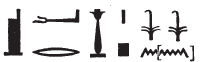 - This might appear to be s.t-ʿr.w , “place of papyriform columns”, but the following nn suggests we have a plural or collective noun. For the term sʿr, “papyrus stalk”, see also Esna 169, 9; Esna 183, 4; Koemoth 1997, pp. 151-154.↩︎
For a possible restoration, note the similar introduction to Esna 155, 1.↩︎
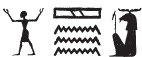 - This trigram evokes the notion of a rising inundation, as well as the harvest month of Shomu.↩︎
 - The verb nḥb, “to harness”, erroneously includes the word kȝ, since the first group frequenly occurs in the name ‘Nehebkau.’↩︎
An allusion to Khnum traveling between Esna and Chemmis in a single night: cf. Sauneron 1959, pp. 71-72, >>sauneron-5?>>.↩︎
Restored after Esna III, 249, 4, §22↩︎
Here begins a tedious list of sacred bulls and cows, and the divinities they belong to. This text continues in Esna 155, Esna 156, and Esna 191. Many of the animal terms are unique, so their precise transliteration is at times uncertain. In the following, I will only translate the names whenever the etymology seems certain. As Sauneron 1963a, p. 311, n. a, noted, it is dificult to distinguish the bull and cow determinatives; in what follows, I will refer to animals as “cow” or “bull” based on the feminine t-ending, which might not be consistent.↩︎
LGG III, 741a (only one other attestation).↩︎
LGG III, 199a-200b.↩︎
 - For this sportive writing of these categories of humans, see also Esna 70, 8; Esna VII, 582, 16.↩︎
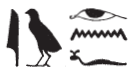 - Based on the syntax, the particle must be a variant of the old imperative prefix ỉ, just as in the following verse.↩︎
 - The eyes write mn < mȝn, “to see (inf.)”. For this designation of the northern coast, see Wb I, 567, 5.↩︎
For this line, see the corrected text in Sauneron 1963a, p. i.↩︎
The plural suffix pronoun apparently refers to the priests of distinct cult statues of Khnum. The verb used here, rwty < “outside; around”, is apparently unique.↩︎
 - Based on the context, double-plumed crown should write the suffix pronoun =f. While this does not seem to be attested elsewhere, the atef-crown elsewhere writes ỉfdw, “four”, in Esna III, 377, 2 (Sauneron 1961, p. 247). Although the crown is not identical, presumably the present uniliteral value would derive from acrophony.↩︎
For Khnum within the House of Life, see Fernández Pichel 2018, p. 67.↩︎
This entire section is paralleled with further details in Esna II, 17, 42-44.↩︎
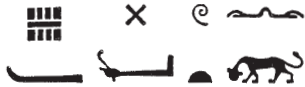 - The first term appears to be rare word p(t)ḥ, “numerous”: Traunecker 1992, p. 77, n. h; Klotz 2012, p. 400, n. d. The leopard usually writes qnd at Esna, but here it seems to be a spelling of qn, “lack; shortage.”↩︎
This paragraph alludes to an Egyptian agricultural concept, whereby the north wind arrives after the Inundation to prevent flood waters from rushing too quickly into the Mediterranean Sea, thus keeping the Nile valley flooded for a longer period: cf. Sauneron 1960, who surprisingly did not discuss this particular passage. For the blue (lit. lapis lazuli) appearance of the inundated fields, see Esna 156, 15.↩︎
A similar sequence of epithets in Esna II, 17, 50; cf. Fernández Pichel 2018, pp. 78-79.↩︎
The following sections are all about Khnum in his original cult center of Elephantine, a subject introduced above in column 16. For Khnum’s connection to that location, compare Esna II, 31, 54-55 (cf. Fernández Pichel 2018, pp. 133-134), and note Khnum of Elephantine receives offerings in Esna VI, 491, and probably Esna II, 9. The Ba of Re, one of the four rams of Mendes (cf. Esna 140), is specifically located at Elephantine in Esna II, 17, 47; Esna III, 250, 16; Dendera X, 371, 10 (cf. Fernández Pichel 2018, pp. 75, n. f, 77; to which this example, and below column 20, should be added).↩︎
As Sauneron 1963a, p. 271, n. a, noted, the word “Ka” is here spelled with the number 4, just as in Esna 156, 19. The spelling derives from the proverbial Four Kas of Ptah: Sauneron 1963b, pp. 60-61; Meeks 1963.↩︎
For the verb nhq, see primarily Sauneron 1964a, pp. 18-19.↩︎

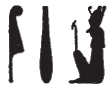 - First sign emended based on the epithet in [Esna III], 326, A. Other texts refer to the “Lord of Justification (nb mȝʿ-ḫrw)”, also determined with a falcon-headed god.↩︎
Yet another reference to Khnum speedily voyaging to Chemmis and the Delta at night, returning to Esna in the morning.↩︎
 - The verb ʿrr is a hapax. Based on conteext and the determinative, it seems to be onomatopoeia for an animal noise.↩︎
The same term occurs in a similar context in Esna 156, 21. The present translation follows the suggestion by Sauneron 1959, p. 63, n. a, which fits the general context.↩︎
Here begins another list of sacred bulls and cows, each linked to specific divinities. See also Esna 156, 22-25; Esna 190, 3-10.↩︎
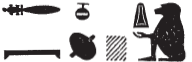 - The first part is clear, but it’s uncertain how the baboon holding bread relates to the word, or why this word is missing a bull or animal skin determinative. The same baboon sign occurs in Esna 115, 8, where it seems to write a similar word for abundance.↩︎
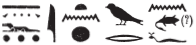 : It would hardly make sense that the sundisk is afraid of the youthful king. The present suggestion is only tentative.↩︎